Last Updated on 20 July 2026 by Team GFD
Thinking about grey composite doors? Compare Agate, French, and Anthracite Grey shades to find the perfect solid-core front door configuration at GFD Homes.
What You’ll Learn:
- Navigating the Spectrum: Differentiating Light, Mid, and Dark Grey Tones
- Property Compatibility: Matching Grey Shades to Red Brick, Stone, and Render
- Modern vs. Traditional Styling: How Hardware Selection Flips the Door’s Identity
- Seamless Internal Liveability: Customizing Separate Exterior and Interior Faces
(Estimated Reading Time: 7-8 Minutes)
Introduction
Grey composite doors have officially become one of the most popular choices for UK homeowners, and it is incredibly easy to understand why. Grey sits in a highly useful architectural sweet spot: it is noticeably more modern than traditional standard white, far more versatile than bold statement colors, and delivers a much more premium aesthetic than people initially expect.
However, not every grey door creates the identical visual result. The spectrum covers everything from soft, heritage chalks to deep, industrial charcoals. Choosing a custom door isn’t just about picking “a grey”—it is about selecting the exact right shade tone, slab panel style, and hardware pairing for your property. By designing your threshold through GFD Homes, finding that perfect architectural match becomes a straightforward, pressure-free experience.
Why grey composite doors are so popular
A front door has a huge effect on how a house feels from the street. The right one makes the property look more finished, expensive and modern; the wrong one leaves even a well-kept house looking flat. Grey works because it adds sophistication without demanding too much attention — it can feel calm and understated, crisp and modern, or more design-led than white, while still blending with a wide range of façades and window colours.
That versatility is the appeal. Homeowners often want a door that feels like an upgrade without being loud, and grey gives them that middle ground: intentional and premium, but rarely risky. It’s exactly why grey has become so popular across both windows and doors in the UK.
Which shades of grey work best?
Grey isn’t one colour — it covers a wide range of moods, and the right shade depends heavily on the property around it.
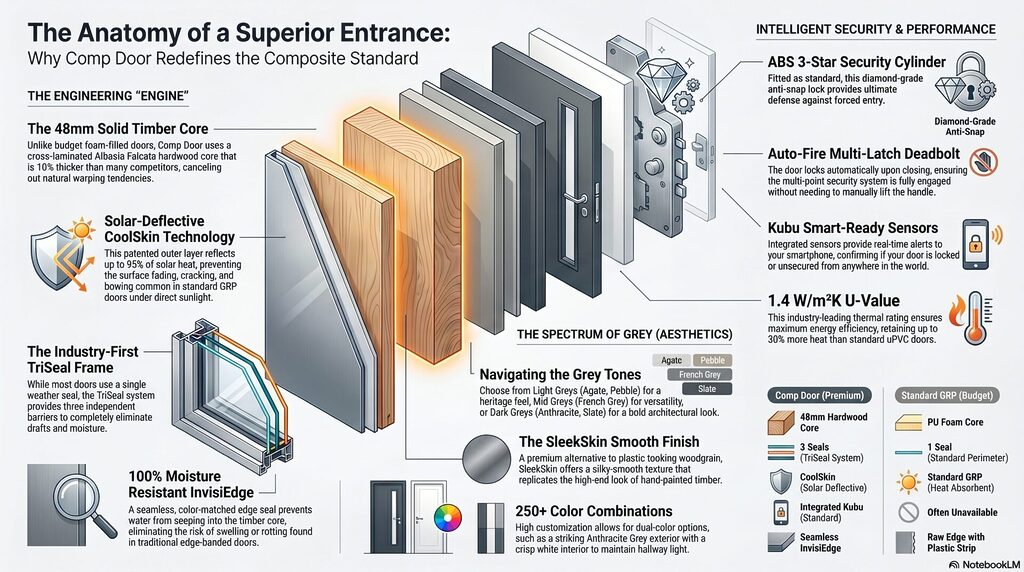
- Lighter greys (Agate Grey, Pebble Grey). Softer and more elegant. Great where you want a modern colour without going too dark, and surprisingly good on traditional homes for a fresh, premium feel that isn’t harsh.
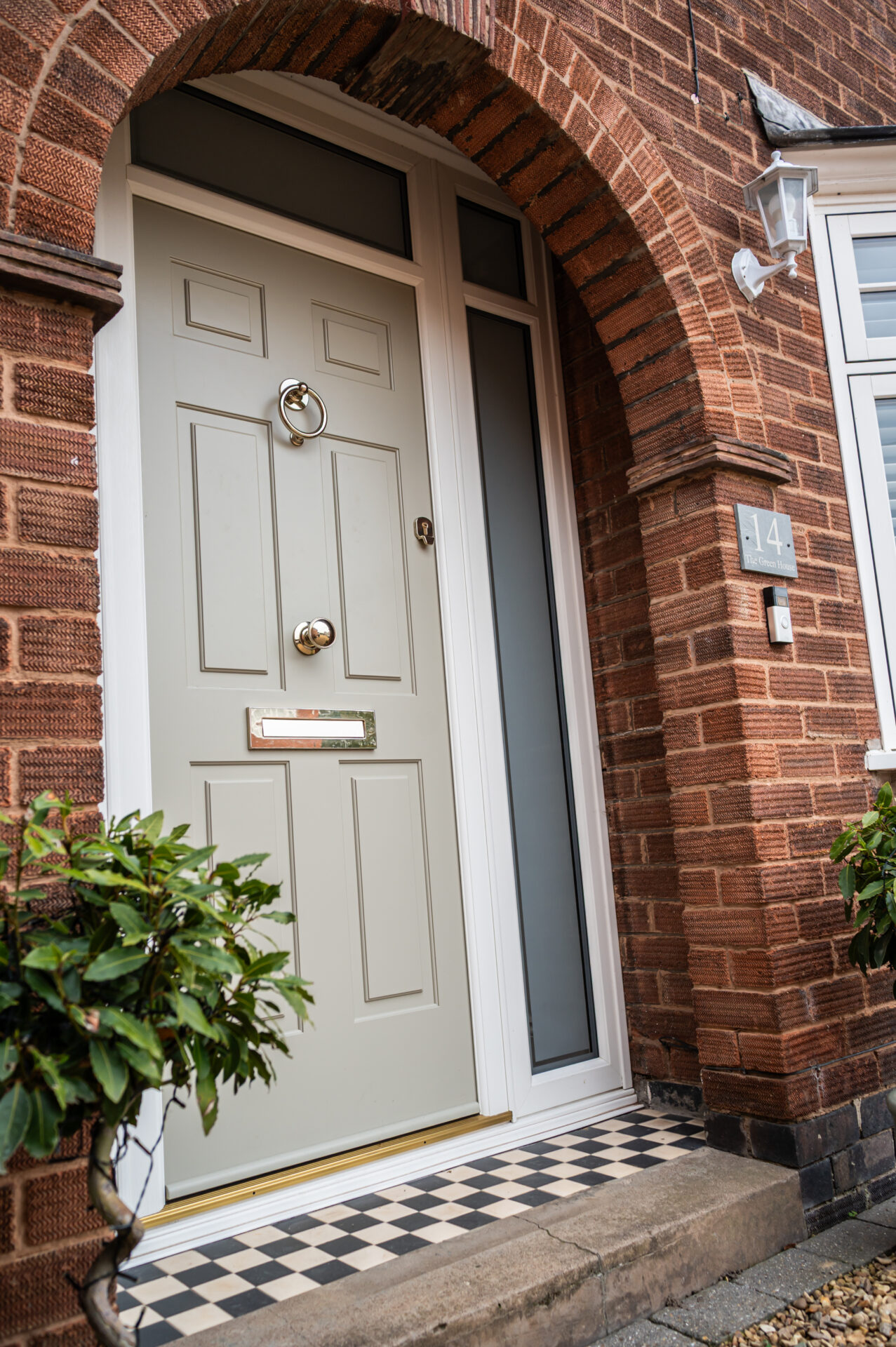
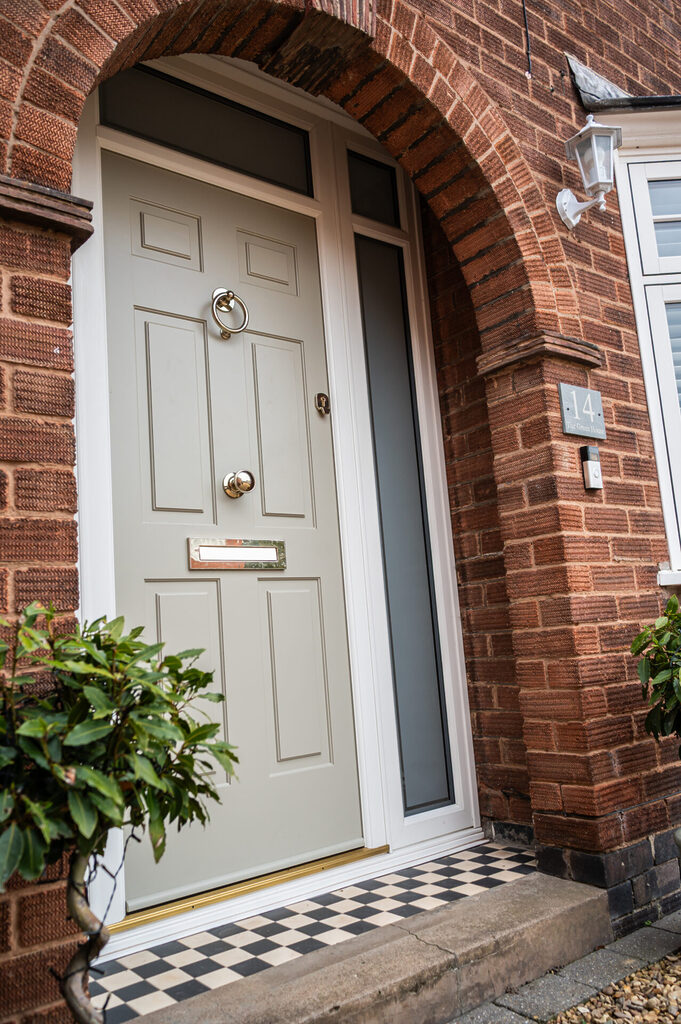
- Mid greys (French Grey). Balanced and versatile, equally at home on cottage-style, transitional and modern properties depending on the door style and hardware.
- Darker greys (Anthracite Grey, Slate Grey). More architectural and contemporary — usually the shades people mean by “a modern grey front door”. They pair well with darker windows, black details and cleaner exteriors.
Comp Door’s palette covers all of these — Agate Grey, Pebble Grey, French Grey, Anthracite Grey and Slate Grey within its wider range — which gives you the freedom to match the door properly to the house rather than squeezing everything into one “grey” answer.
Which homes suit grey composite doors best?
One of grey’s biggest strengths is how widely it works. On modern properties, darker greys look natural alongside contemporary glazing, dark frames and minimal exteriors, making the entrance feel sharp and premium. On traditional homes, softer or muted greys can look surprisingly strong — more elegant and updated than white, but restrained enough not to clash with the property’s character; on red brick especially, a grey door can feel timeless if the glazing and hardware support it. On suburban family homes, grey gives a strong visual lift without feeling too trend-led — often the perfect “upgrade colour” for owners who want the house to look better without the door dominating everything.
Grey and modern styling
Grey has become a staple of contemporary design because it works so well with clean lines and modern finishes. A darker grey can feel more sophisticated than black in some settings — premium and modern, but softer and more flexible than a full black-on-black entrance. Here, finish is crucial: a heavily textured or ordinary slab undercuts the whole effect. That’s why SleekSkin matters — its smoother, finer-grain, hand-painted finish helps a modern grey door look more architectural and more premium rather than merely dark and practical.
Grey and traditional styling
Grey doesn’t only belong on ultra-modern homes — an important point, because many people assume it’s too contemporary for older properties. In reality, softer greys can look beautiful on traditional homes when paired with the right door. A classic panelled design in Agate Grey or Pebble Grey looks elegant and understated; decorative glazing softens it further; traditional hardware keeps it in keeping with the age of the house. This is where Comp Door’s breadth helps — because the colour palette is strong and the style range is equally broad, you can pair classic designs like Whitmore, Middleton or Winslow with softer greys, or contemporary styles like Aston, Abercorn or Rutland with darker greys, depending on the look you want.
What colours pair well with a grey front door?
Grey is one of the easiest colours to build around. It pairs with white and cream façades, black frames and darker trims, sits naturally against brick, complements stainless hardware, and works better than people expect alongside warmer materials like oak, paving and stone. That ease extends inside, too: because a composite door is seen from both sides, the internal colour matters. Comp Door’s inside-and-out combinations are a real advantage here, letting you create a strong grey exterior while choosing an internal finish that suits the hallway. The best front doors work from the road and from the inside.
What hardware works best with grey doors?
Hardware can change the whole personality of a grey door. Black furniture gives the strongest contemporary look, especially on darker greys; stainless or satin finishes create a cleaner, more premium contrast that suits modern entrances; traditional knockers, letterplates and handles pull a grey door toward a heritage feel. That adaptability is why grey is such a useful foundation colour — the same slab can read traditional or modern depending on the hardware, glazing and frame around it.
Do grey composite doors date?
This is one of grey’s quiet strengths. Unlike some bold statement colours, grey tends to age well — contemporary, but not in a way that looks dated quickly. A well-chosen grey often feels more timeless than obviously trend-led colours because it sits between classic neutrality and modern design. Not every shade suits every situation, but as a colour family, grey is one of the safer premium choices you can make: modern enough to feel current, neutral enough to live with long term, versatile enough to suit a wide range of homes.
The bottom line
A grey composite door helps the house look more premium, gives the entrance a more considered feel, works across traditional and modern homes, allows flexibility with glazing and hardware, and stays stylish without being overbearing. Whether you choose a soft, elegant grey or a darker architectural one, the right grey lifts the house without overwhelming it — which is exactly what most homeowners want from a front door.
🛒 Browse the full collection at www.gfdhomes.co.uk
📞 Or call 01642 309576 for expert guidance and a no-pressure quote.
In a rush? Why not contact us via Whatsapp
Browse Our Article
- Brand Spotlight: Comp Door Composite Doors
- Your Guide to the Best Quality Composite Doors
- Blue Composite Door: Transform Your Home & fall in love from Just £568
- Looking for Trade Products? Explore The Trade Village
FAQ’s
1. What are the most popular shades of grey available for a composite door? The palette generally spans three distinct design moods:
- Lighter Greys (Agate Grey, Pebble Grey): Softer, muted tones that look highly elegant on traditional brickwork or country cottages.
- Mid Greys (French Grey): Extremely versatile heritage tones that sit comfortably on both classic and transitional style homes.
- Darker Greys (Anthracite Grey, Slate Grey): Bold, architectural charcoals engineered to match modern dark-framed uPVC windows.
2. Will a grey front door look dated or go out of style quickly? No. Unlike bright, highly saturated trend colors that fluctuate in popularity, grey functions as a modern neutral. Because it anchors itself securely between classic understated neutrality and sharp contemporary design, a well-specified grey exterior ages beautifully and retains its premium curb appeal for decades.
3. How does the choice of hardware change the personality of a grey door? Grey acts as a chameleon foundation. If you install matte black pull bars and handles on an Anthracite slab, you achieve an ultra-modern, industrial aesthetic. Conversely, if you pair polished chrome or traditional brass rim-latches and ring knockers with a French Grey panel, the entrance immediately shifts toward a timeless, heritage look.
4. How does GFD Homes help me coordinate my interior hallway with a dark door? A major drawback of buying a dark door from a standard catalog is being forced to accept the same color on the inside face, which can make narrow hallways feel gloomy. GFD Homes provides an online 3D designer with dual-color controls. This lets you select a striking architectural grey for the street view while keeping the inside frame and slab crisp white to maximize indoor light.