Last Updated on 20 July 2026 by Team GFD
uPVC door vs composite door? Compare structural lifespan, thermal protection, security ratings, and transparent online costs with GFD Homes.
What You’ll Learn:
- Material Composition: Breaking Down the Physical Structural Differences
- Curb Appeal and Longevity: Evaluating Surface Finishes Over a 20-30 Year Lifespan
- Defensive Barriers: Comparing Multi-Point Locks and Core Density
- Financial Practicality: When to Save with uPVC or Upgrade via GFD Homes
(Estimated Reading Time: 6-7 Minutes)
Introduction
If you are planning to replace a tired front entrance, one of the most common questions you will face is this: should I choose a uPVC door or a composite door? It is a highly sensible comparison to make. Both options share the exact same home-improvement space, both can instantly smarten up an aging facade, and both are widely available across the UK marketplace.
For most homeowners, the final decision comes down to balancing your upfront budget against long-term appearance, physical security, and everyday thermal efficiency. While an unplasticised polyvinyl chloride framework can seem like the easiest answer, designing your threshold through GFD Homes reveals why investing in a premium solid-core system frequently delivers significantly better overall value for your property.
What’s the difference between uPVC and composite?
A standard uPVC door is usually built around a lighter, plastic-based construction. That keeps the price down, and for some homes and budgets it’s enough. A composite door is built differently: from multiple layers and components chosen for strength, stability, weather resistance, insulation and finish, which is why it tends to feel more substantial and more premium.
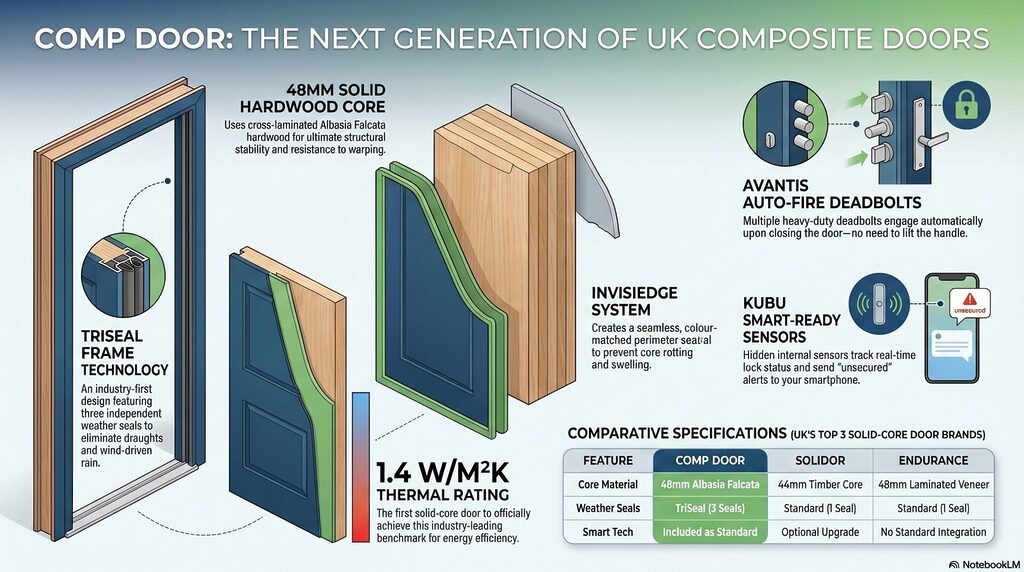
Comp Door, for example, is built around a 48mm cross-laminated Albasia Falcata timber core, a 1.4 W/m²K U-value, PAS-24:2022, an ABS security cylinder as standard and advanced locking — a very different proposition from a basic uPVC entrance. In practice that means a stronger feel, a more secure feel, a more premium appearance and a better all-round front-door experience.
Which looks better?
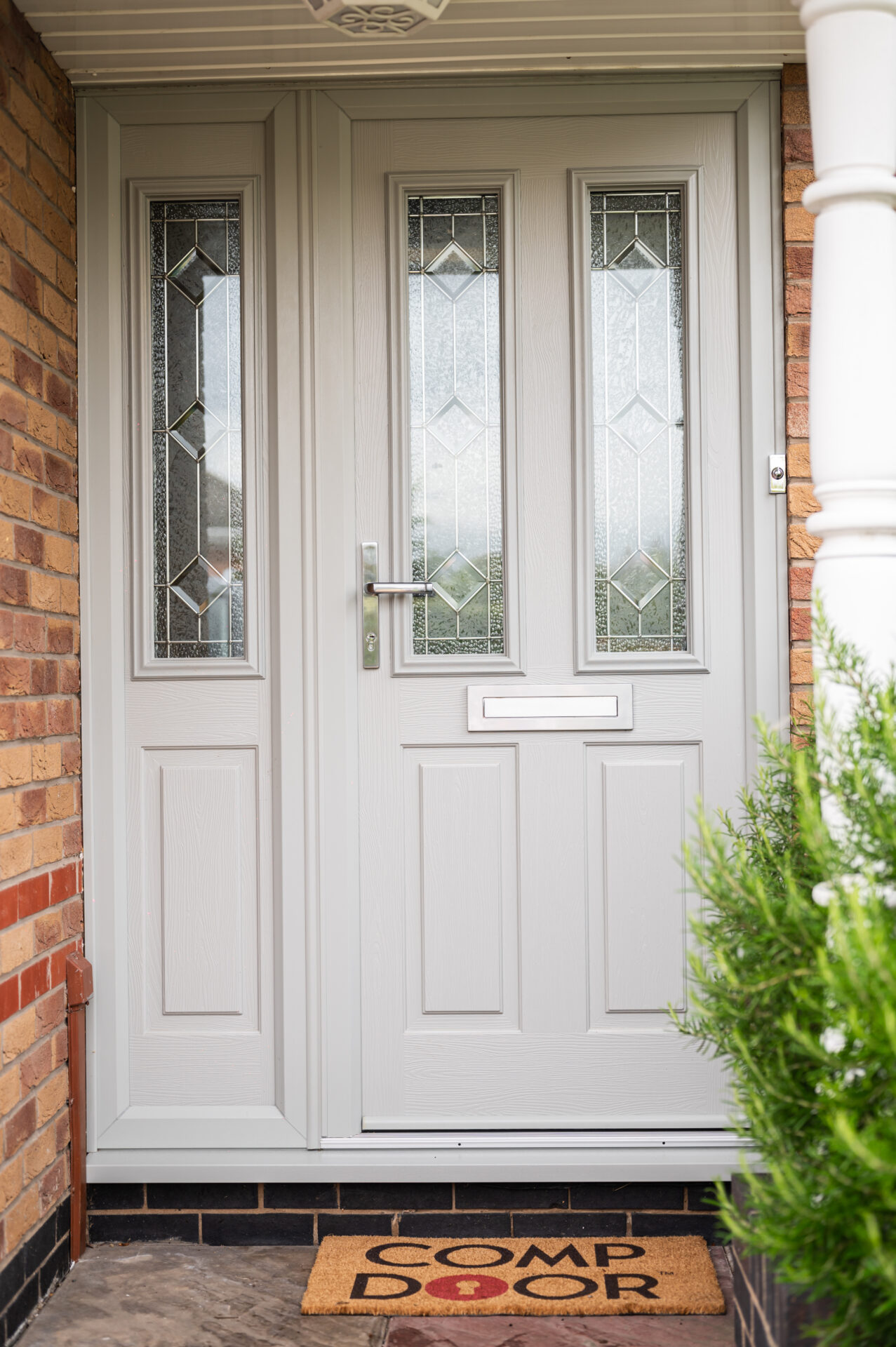
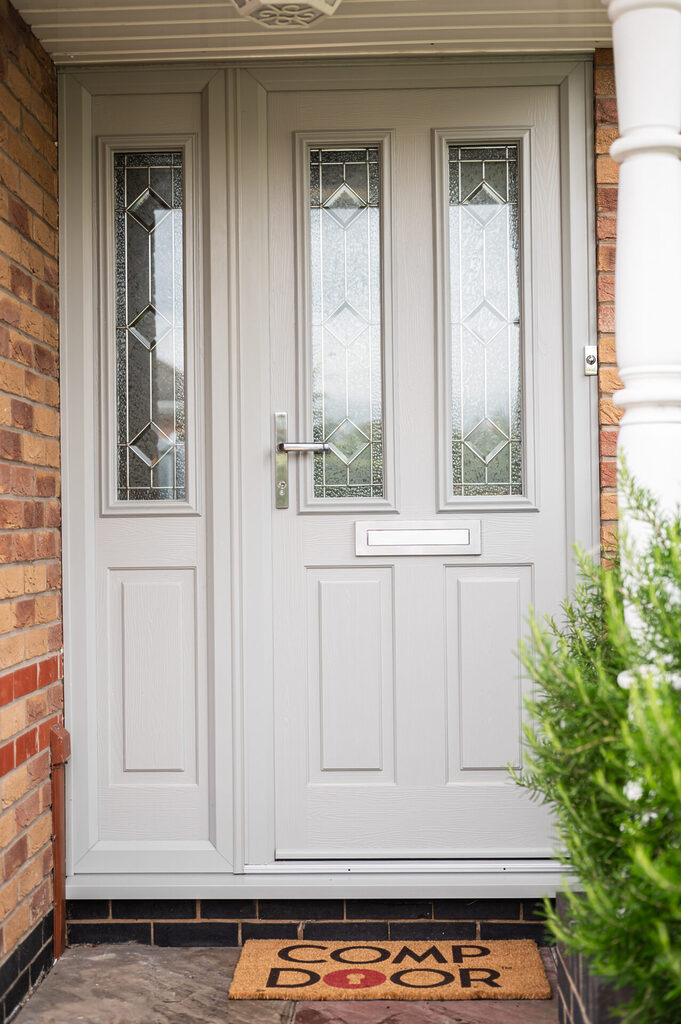
For most homeowners, composite wins. Not every uPVC door looks bad — some are perfectly tidy — but many don’t match the visual presence, finish quality and premium feel of a good composite door. Composite is usually chosen not just to replace an old entrance but to improve the whole house: the slab looks more substantial, the detailing more considered, the entrance more of a statement.
That matters most for kerb appeal, where the front door has a disproportionate effect on first impressions. A weak, dated door can drag down the whole elevation; a strong, well-chosen one makes the house feel more expensive and better cared for. It’s a big reason premium brands perform so well — Comp Door builds much of its proposition around style and flexibility, with over 250 inside-and-out colour combinations and finishes like SleekSkin.
Which feels more secure?
Again, composite usually has the edge — and a lot of it comes down to feel as much as rating. A good composite door feels more substantial when it closes: less hollow, less lightweight, more confidence-inspiring. Security is emotional as well as technical; people want a door that not only is secure but feels secure. A premium composite door also tends to bring a stronger standard security story — Comp Door cites PAS-24:2022, an ABS anti-snap cylinder as standard, advanced locking and the Avantis Autofire system. uPVC can be serviceable, but composite is the more reassuring choice when the entrance needs to feel like it’s doing a serious job.
Which is warmer and better insulated?
A front door is part of the building envelope. Perform well and the entrance feels warmer, less draughty and more settled; perform badly and the hallway feels cold and exposed. Many people don’t think about this until after they change the door — and then it becomes one of the most noticeable parts of the upgrade. Composite often makes the stronger thermal case thanks to its construction: Comp Door’s 1.4 W/m²K U-value, CoolSkin, TriSeal and InvisiEdge all support a warmer, better-protected entrance.
Which offers better value?
If value means lowest upfront cost, uPVC often wins, and for some projects that’s enough. But that’s not how most homeowners experience value. The better question is: which door gives me the stronger overall result for the money — across looks, feel, security, warmth, pride in the house and whether the spend still feels justified later?
Judged that way, composite usually comes out ahead, because you’re not just paying for a slab — you’re paying for a better-looking home, a stronger-feeling entrance and a more complete, premium product. That’s especially true of a door like Comp Door, which combines strong core construction, thermal performance, security, colour choice and smart reassurance through Kubu. Better value isn’t necessarily less money spent; it’s more result gained.
When might a uPVC door still make sense?
It’s worth being honest. If the budget is very tight and the goal is simply to replace a tired entrance with something functional, a standard uPVC door may do the job. If you’re less concerned about premium feel, wider colour choice or a more substantial sense of security, you may be perfectly happy with it. The important thing is understanding the trade-off. If you want more visual impact, more reassurance and a purchase that feels like a meaningful upgrade, composite becomes the better option.
Which is better for modern homes?
Usually composite. Modern homeowners tend to want more than basic function — style, colour choice, an entrance that feels like part of the home’s design, often with smart features too. A premium composite door is far better placed to deliver that. Comp Door is a good example, pairing a strong style range with contemporary finishes like SleekSkin and practical smart reassurance through Kubu sensors on most standard doors.
The bottom line
If you want the cheapest route to replacing an old door, uPVC may well be enough. But if you want a door that improves the look of the house, feels more substantial, gives stronger security reassurance, performs better day to day and feels more worthwhile over time, composite is usually the better choice. The best decision is rarely the lowest initial price — it’s the one that leaves you feeling you genuinely improved the house.
🛒 Browse the full collection at www.gfdhomes.co.uk
📞 Or call 01642 309576 for expert guidance and a no-pressure quote.
In a rush? Why not contact us via Whatsapp
Browse Our Article
- Comparing Doors and Windows Suppliers with GFD Homes
- Comp Door Doors: Affordable, Durable & Built to Last
- Brand Spotlight: Comp Door Composite Doors
- Looking for Trade Products? Explore The Trade Village
FAQ’s
1. What is the fundamental construction difference between these two doors? A standard uPVC door is built primarily from lightweight, insulated plastic profiles wrapped around a basic steel internal frame. Conversely, a premium composite door is engineered as a multi-material system—bonding a massive solid hardwood core with advanced weather-resistant outer skins, creating a much heavier and more stable slab.
2. Which door type offers better physical defense against forced entry? While modern uPVC options utilize decent multi-point locking hooks, their lightweight plastic builds are inherently more flexible under physical attack. A premium composite setup provides a rock-solid perimeter barrier, anchoring high-security multi-point deadbolts into a dense timber core that resists structural bowing or warping.
3. How do they compare when it comes to keeping a cold hallway warm? Composite entries offer vastly superior thermal insulation. High-spec models achieve elite U-values of 1.4 W/m²K or lower by utilizing specialized triple weather seals and heat-reflective surface skins. Standard plastic doors provide moderate thermal protection but are far more susceptible to whistling winter drafts as the frame settles over time.
4. When does a standard uPVC door still make the most practical sense? If your primary focus is keeping upfront replacement costs as low as possible for a functional utility room, side garage entrance, or rear exit, a clean uPVC layout is a highly practical choice. However, for a prominent front entrance where kerb appeal, maximum security, and phone-linked smart monitoring matter, a composite build is the superior route.