Last Updated on 20 July 2026 by Team GFD
Choosing a composite door color? Explore over 250 inside-and-out combinations, popular grey and heritage shades, and dual-color configurations at GFD Homes.
What You’ll Learn:
- The Visual Harmony Rule: Why Slabs Should Never Be Selected in Isolation
- The Trend-Led Favorites: Evaluating Black, Anthracite Grey, and Heritage Shades
- The Dual-Color Advantage: Designing Separate Exterior and Interior Looks
- Stress-Free Visualization: Custom-Configuring 250+ Palette Options Online
(Estimated Reading Time: 5-6 Minutes)
Introduction
Choosing the right front door color sounds like an easy task until you actually have to sit down and do it. At first, it feels like simply picking a favorite shade from a brochure. Then the real-world architectural questions arrive: Will it suit the existing brickwork? Will it clash with the window frames? Is it too bold for the street? Will I still like this exact tone in three years, or will the novelty quickly wear off?
Your front threshold is one of the most visible architectural features on your entire property. A well-considered color choice can instantly make a house feel sharper, more premium, and completely structurally cohesive. Conversely, a poor color match can leave even a technically elite installation feeling slightly out of place. When designing your upgrade through GFD Homes, understanding how to balance color psychology with your property’s building materials is the key to long-term satisfaction.
Why colour matters more than people think
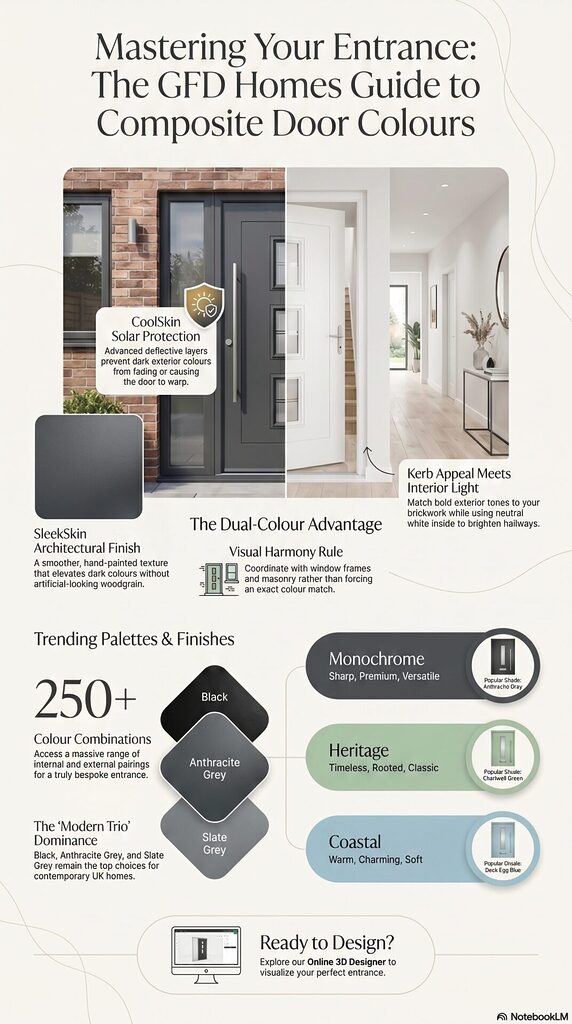
The front door sits in an important visual position: often the first thing people notice, the frame for the entrance and the tone-setter for the property. Because you use it every day, it also shapes how you feel about the house. So colour influences both kerb appeal and owner satisfaction — a strong choice makes the entrance feel deliberate and premium, a weak one leaves the elevation feeling ordinary. It’s exactly why composite doors suit design-conscious homeowners: the better ranges offer more choice and more inside-and-out flexibility than simpler products. Comp Door, for instance, offers over 250 colour combinations inside and out, from White, Cream and Duck Egg Blue to Chartwell Green, Black, Anthracite Grey, Slate Grey, Irish Oak, Golden Oak, Rosewood and Schwarzbraun — room to choose properly, not just a handful of safe defaults.
How should you choose a front door colour?
The most useful rule: don’t choose the colour in isolation. A front door isn’t floating on a white background like it is in a brochure — it sits among brick, render, stone, windows, roofline, paving and lighting. The best colour isn’t the one you like most on its own; it’s the one that works best with the whole property. Before choosing, weigh four things:
- The style of the house. A colour that sings on modern render may feel wrong on traditional brick, and vice versa.
- The window and frame colour. The door needn’t match exactly, but it should feel like it belongs in the same visual world.
- The mood you want. A statement, a quietly premium feel, or simply a fresh lift that doesn’t dominate?
- The long-term feel. Will it still seem right once the novelty wears off?
Which colours are most popular?
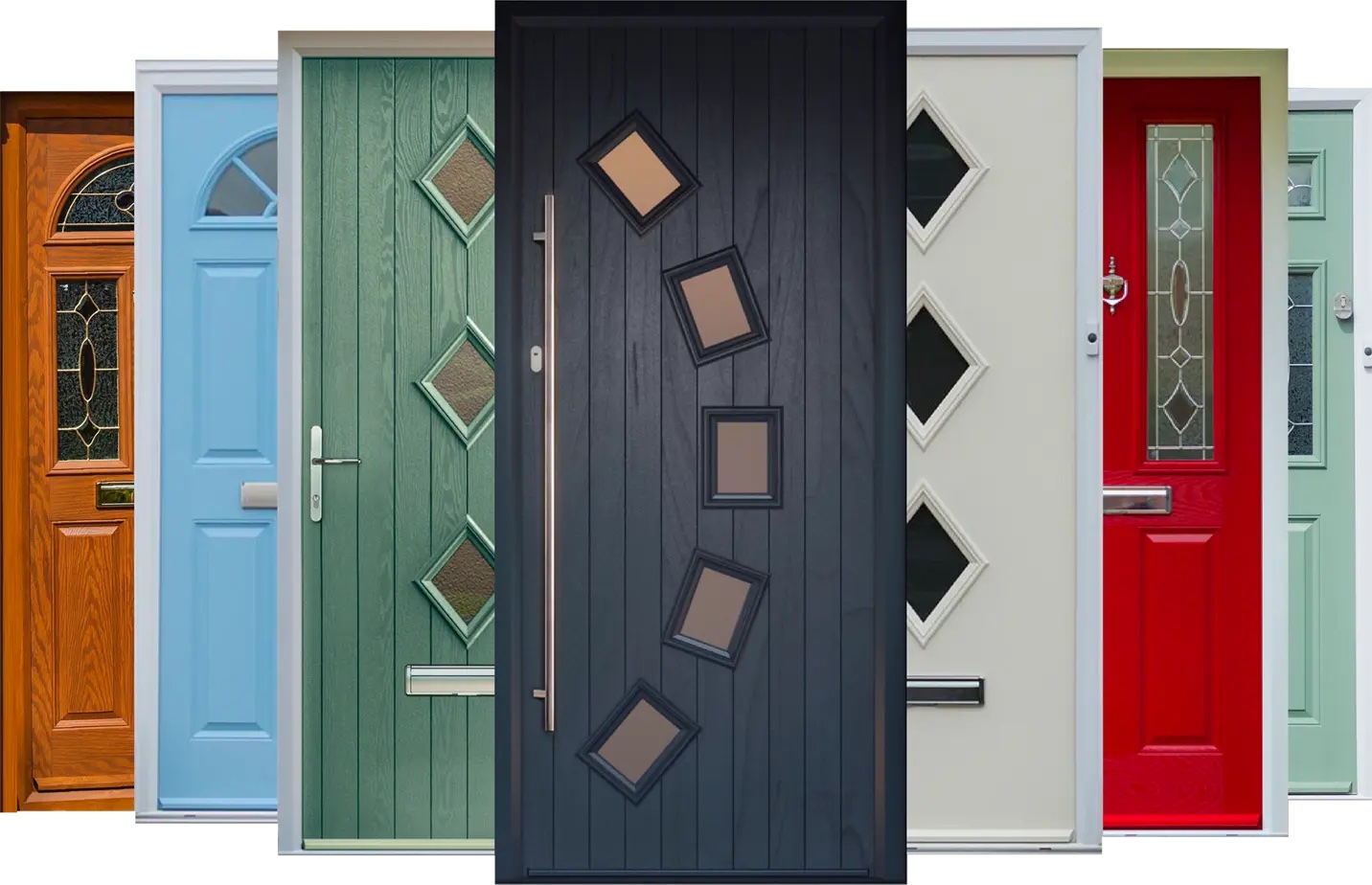
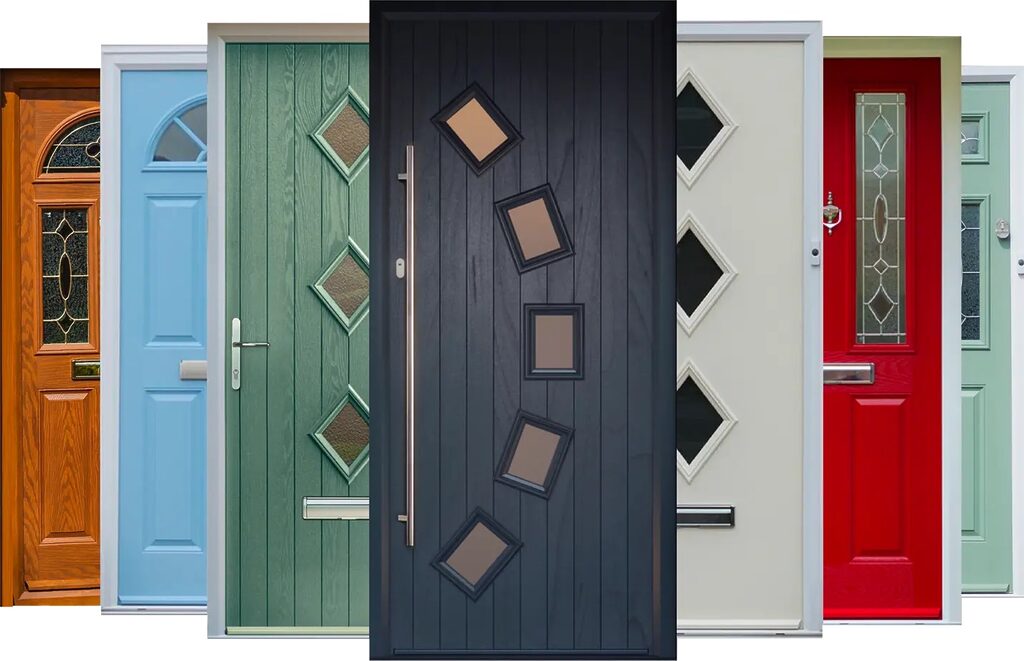
A few families perform strongly again and again. Black remains a favourite — premium, sharp and versatile across modern and traditional homes. Grey is another major choice, especially Anthracite, Slate, French, Agate and Pebble; it feels more modern than white and easier to integrate than bolder colours. Blue offers personality without chaos: darker blues feel elegant and classic, softer shades like Duck Egg Blue bring warmth and charm to cottages. Green, particularly Chartwell Green, works beautifully where you want something heritage-inspired and quietly distinctive. Red still has its place for a traditional, welcoming entrance with stronger personality. And warmer wood-effect tones — Irish Oak, Golden Oak, Rosewood — appeal where you want a softer, more classic finish. What matters isn’t which colour is popular overall, but which suits the home you’re improving.
Should the front door match the windows?
Not exactly — but they should feel coordinated. The better approach is visual harmony rather than strict matching. A black or dark grey door works beautifully with white frames; a softer heritage colour can work with anthracite windows if the house style supports it; a timber-effect door can sit happily with coloured frames if the wider materials tie it together. The point is that the entrance should feel intentional. This is where broader ranges help — and Comp Door’s inside-and-out offer is especially useful, letting the external colour work with the house while the internal colour is chosen sympathetically for the hallway.
Which colours suit traditional homes?
Traditional homes usually suit colours that feel timeless and a little more rooted — which doesn’t mean dull, just in sympathy with the property. Strong choices include Black, Chartwell Green, Duck Egg Blue, Blue, Cream, Irish Oak, Golden Oak, Agate Grey and Pebble Grey, all of which sit naturally against brick, stone and period architecture. Glazing and hardware matter here too: a traditional colour works best supported by an appropriate style of glass and furniture, which is why colour should never be chosen in isolation from the rest of the door.
Which colours suit modern homes?
Modern homes handle darker, cleaner tones especially well — Anthracite Grey, Slate Grey, Black, French Grey and Schwarzbraun all create an architectural, premium entrance with the right slab, frame and hardware. Contemporary detailing is key: a smoother finish, slimmer glazing and modern furniture help the colour feel more design-led. This is where SleekSkin earns its place in the colour conversation — its smoother, finer-grain, hand-painted finish makes darker and more modern shades look more refined, so the wrong surface doesn’t undermine an otherwise strong colour.
Should the inside match the outside?
Not necessarily — and this is one of the biggest advantages of a flexible range. The outside of the door is part of kerb appeal; the inside is part of everyday living, and they’re often two different design problems. You might want a bold black or anthracite entrance outside but a softer, lighter finish inside, or a heritage green externally with a neutral hallway internally. Inside-and-out flexibility lets the door work properly on both sides rather than forcing one choice to do everything — one of Comp Door’s strongest design-led selling points.
Are bold colours a risk?
They can be, but it depends on the house and the homeowner. A bold colour is a good idea when it suits the property, is chosen with confidence and is supported by the rest of the entrance. It’s a bad idea when chosen just for novelty, without thought for how it works with the house. That’s why blue, green and red can look excellent or slightly awkward — success depends less on the colour itself than on whether it fits the setting. If you’re worried about regret, choose colours with depth and timelessness: a strong dark blue usually ages better than a very bright modern shade, and a heritage green tends to feel more lasting than an unusual trend-led tone.
How do you know it’ll still feel right later?
A front door should feel right after the novelty fades, not just exciting today — so the strongest choices balance personality with longevity. Black and greys age well because they’re versatile and premium; heritage greens and blues age well because they feel rooted and classic; softer neutrals age well because they’re easy to live with. The more extreme the colour, the more certain you should be that it suits both the property and your taste long term. That’s not a reason to avoid colour — just a reason to choose with the whole house in mind, not only the sample swatch.
The bottom line
Choose the right colour by thinking about the house, the windows, the entrance style, the mood you want and how the door will feel both now and later. The best colour isn’t the most popular one — it’s the one that makes the house look better, feel more complete and still seems right after installation. With a flexible range like Comp Door, you have a much better chance of getting that decision right.
🛒 Browse the full collection at www.gfdhomes.co.uk
📞 Or call 01642 309576 for expert guidance and a no-pressure quote.
In a rush? Why not contact us via Whatsapp
Browse Our Article
- Your Guide to the Best Quality Composite Doors
- Composite Doors: A Clear Guide for Homeowners
- Composite Door Inspiration with Coloured Front Doors
- Looking for Trade Products? Explore The Trade Village
FAQ’s
1. Does my new front door color need to match my window frames exactly? No. While your entrance should feel coordinated with the rest of your home’s facade, a strict exact match isn’t required. For instance, a striking black or deep charcoal slate composite door looks incredibly stylish against classic white uPVC window frames, establishing a crisp, modern contrast that frames the entryway beautifully.
2. What are the best timeless color choices for traditional or period properties? Traditional brick and stone homes look spectacular when paired with rich, rooted heritage colors. Timeless shades like deep Navy Blue, classic Black, soft Cream, and muted greens like Chartwell Green or Duck Egg Blue complement period architecture effortlessly. Warmer, realistic wood-grain foils like Irish Oak or Golden Oak are also excellent for maintaining a heritage feel.
3. Which surface textures look best when opting for modern darker shades? If you are specifying a highly contemporary color like Anthracite Grey, Slate Grey, or Schwarzbraun (black-brown), texture is everything. Heavily molded, artificial plastic woodgrains can cheapen the look of dark doors. Opting for a premium smooth SleekSkin finish provides a fine-grain, hand-painted timber look that gives darker colors an elite, architectural quality.
4. Can I choose one color for the street view and a different one for my interior hallway? Yes. One of the greatest advantages of the premium range available at GFD Homes is full inside-and-out dual-color flexibility. You can choose a bold, statement color like Red or French Grey to maximize exterior curb appeal, while keeping the interior face of the door slab a clean, neutral White or Cream to match your hallway decor and maximize indoor light.