Last Updated on 9 June 2026 by IanR
Alternatives to Sliding Patio Doors: The Complete UK Guide (2026)
Last updated: June 2026 · Written by Team GFD
The best alternatives to sliding patio doors are bi-fold doors, slimline aluminium sliding doors, lift-and-slide doors, French doors, and single doors with fixed sidelights. For dividing internal rooms, the most popular options are Shoji screens, internal bi-folds, sliding barn doors and Crittall-style screens. The right choice comes down to three things: how wide your opening is, how much floor space you can spare, and your budget.
Sliding patio doors have been the default way to connect a home to the garden for decades. They glide neatly out of the way, don’t eat into your floor space, and flood a room with light. But they aren’t the only answer — and for a lot of UK homes they aren’t the best answer.
Maybe your opening is too narrow for a slider to look right. Maybe you want a wall of glass that disappears completely. Maybe you want classic period charm rather than a flat modern panel. Whatever’s pulling you away from a standard slider, this guide walks you through every realistic alternative — what it’s best for, what to watch out for, and roughly what it costs — so you can choose with confidence instead of guessing on the biggest single feature in the room.
Key takeaways
- Want the biggest possible opening? Bi-fold doors fold a whole wall away to one side.
- Want maximum glass and minimal frame? Slimline aluminium sliding doors give panoramic, near-frameless views.
- Large, heavy panels you want to move with one finger? Lift-and-slide doors.
- Classic look or a narrower opening? French doors or a single door with sidelights.
- Dividing a room indoors? Shoji screens, internal bi-folds or barn doors.
- All GFD external door ranges come with a 10-year guarantee, finance options, and the chance to see them in our Teesside showroom before you buy.
Sliding patio door alternatives at a glance
| Door type | Best for | How it opens | Rough cost | GFD range |
|---|---|---|---|---|
| Bi-fold doors | Opening an entire wall onto the garden | Panels fold & stack to one side | £££ | Korniche aluminium bi-folds |
| Slimline sliding doors | Maximum glass, minimal frame, panoramic views | Slides on a track (no floor space used) | £££ | Cortizo slimline / Smart aluminium |
| Lift-and-slide doors | Very large, heavy panels & effortless operation | Handle lifts the door onto rollers, then glides | £££+ | Reynaers lift & slide |
| French doors | Classic style, smaller openings, period homes | Two hinged panels swing open | ££ | Industrial-style French doors |
| Single door + sidelights | Narrower openings that still need light | One hinged door with fixed glazed panels | ££ | Comp Door composite |
| Stable / Dutch doors | Letting in air while keeping the bottom shut | Top & bottom halves open independently | ££ | Composite stable doors |
Costs are a guide for supply only and vary with size, glass spec and colour. Ask us for an exact quote.
Best alternatives for opening up to the garden
1. Bi-fold doors — the whole wall disappears
If your goal is to throw open the back of the house and blur the line between kitchen and garden, bi-folds are hard to beat. Multiple slim panels concertina and stack neatly against one side, leaving you with an almost completely open wall.
Best for: entertainers, open-plan kitchen-diners, and anyone who wants the maximum unobstructed opening in summer.
Watch out for: the stacked panels need somewhere to sit, and the frames are slightly more visible than a slider when the doors are closed.
Our Korniche aluminium bi-folding range is one of the most refined on the market, with slim sightlines and a smooth, secure action. See how it stacks up against a slider in our bi-fold vs sliding door comparison.
2. Slimline aluminium sliding doors — maximum glass, minimal frame
Prefer the slider format but find standard ones too chunky? Modern slimline aluminium sliders are a different animal: ultra-narrow frames, huge panes, and uninterrupted views even when closed. Because they slide rather than swing or fold, they use zero floor space.
Best for: contemporary homes, big openings, and anyone who values the view through the glass as much as the opening itself.
Watch out for: one panel always sits behind another, so you’ll never open the entire span the way you can with bi-folds.
Look at the near-frameless Cortizo slimline range (corner and pocket systems available) or the Smart aluminium sliding doors for a cleaner, more premium take on the classic slider.
3. Lift-and-slide doors — big panels, one-finger operation
Lift-and-slide doors look like a slider but work differently. Turn the handle and the whole door lifts slightly onto rollers, so even very large, heavy panels glide with almost no effort. Drop it back down and it seals tight against the weather.
Best for: oversized openings, exposed or coastal locations, and a genuinely premium feel.
Watch out for: it’s the top end of the budget and usually a made-to-measure job.
Our Reynaers lift-and-slide range is built for exactly this. Not sure of the difference? Read what is a lift-and-slide door?
4. French doors — timeless and full of light
For smaller openings, period properties, or anyone who simply prefers a classic look, French doors are the enduring favourite. Two hinged panels swing open and the multiple glazed sections pour light into the room.
Best for: traditional and characterful homes, narrower openings, and a softer, more elegant feel than aluminium sliders.
Watch out for: the open doors swing into (or out of) the space, so allow for the clearance.
Our industrial-style French doors give the classic format a sharp, contemporary edge. See how they compare in French door vs patio door.
5. Single door with fixed sidelights — light without the span
If your opening isn’t wide enough for a slider or bi-fold but you still want plenty of natural light, a single hinged door flanked by fixed glazed sidelights is a smart, streamlined solution.
Best for: narrower entrances, side returns, and a clean modern finish on a tighter budget.
Watch out for: it gives you a doorway, not a full opening — you won’t get that “whole wall open” feeling.
A composite door such as the Comp Door range works beautifully here, with over 250 colours, a 48mm timber core for solidity, a 1.4 W/m²K U-value for warmth, and PAS24 security as standard — from around £806.
6. Stable (Dutch) doors — air in, everything else out
Divided horizontally so the top and bottom open independently, stable doors let you bring in fresh air and light while keeping the lower half shut — ideal with pets, young children, or a kitchen that opens to the garden.
Best for: cottages, kitchens, utility and boot rooms, and a touch of country charm.
Watch out for: it’s a single-door format, so it’s about character and practicality rather than a big glazed opening.
Alternatives for dividing internal spaces
Not every “sliding door alternative” faces the garden. If you’re trying to separate or zone rooms indoors, these are the options worth knowing:
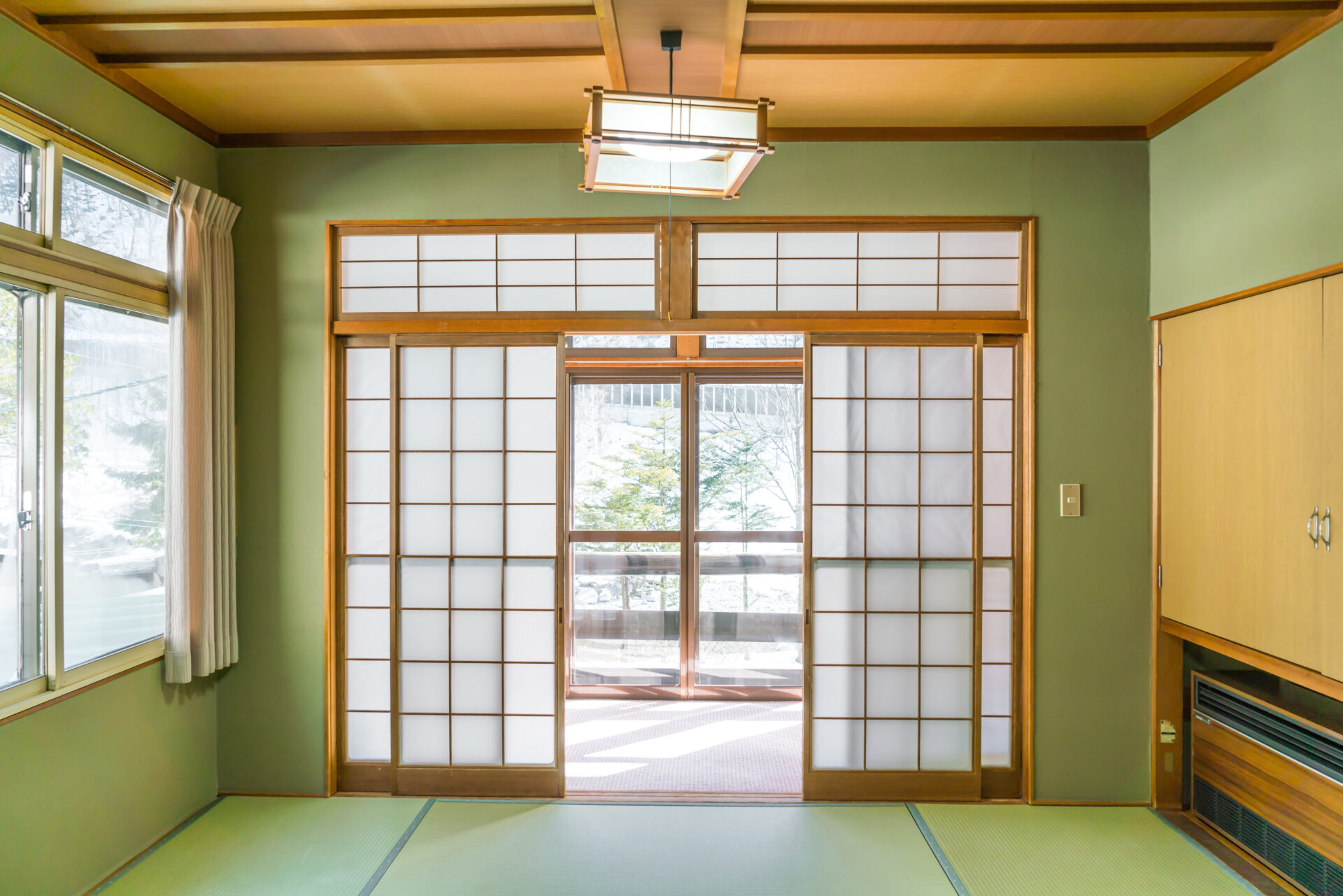
- Shoji screens — Japanese-inspired timber frames with translucent panels. Soft light, gentle privacy, very calm.
- Internal bi-fold / accordion doors — fold flat to open up two rooms into one, then close to create a partition. Great space-savers.
- Sliding barn doors — slide along a track above the doorway, using no swing space and adding a rustic, characterful feature.
- Crittall-style / industrial screens — slim black-framed glazed partitions that divide a room without blocking light. Very on-trend.
- Pivot & centre-swing doors — rotate on a central axis for a dramatic, design-led statement entrance.
How to choose: a 3-question check
Before you fall in love with a look, run your opening through these three questions:
- How wide is the opening? Wide spans suit bi-folds and sliders; narrower ones suit French doors or a single door with sidelights.
- How much floor space can you spare? Sliders and lift-and-slides use none. Bi-folds need stacking room. French doors need swing clearance.
- What’s the budget — and how often will you fully open it? If you’ll open the whole wall most summer days, bi-folds earn their cost. If you mostly want light and a great view, a slimline slider is the better spend.
Still torn? That’s exactly what our team is for. Bring us your measurements and we’ll tell you honestly which option suits your home — including which one we’d not recommend and why.
See and feel the difference before you decide
Choosing the biggest feature in the room is a lot easier when you can stand in front of it. At our Teesside showroom in Stockton-on-Tees you can open, touch and compare bi-folds, sliders, French and composite doors side by side — no pressure, just honest advice from a family business that’s been creating dream homes since 2008.
Every external door range comes with a 10-year guarantee, flexible finance, and nationwide installation.
📞 Book a free design consultation or quote: contact our team or call 01642 309576.
Frequently asked questions
What is the best alternative to sliding patio doors?
For most UK homes the best alternative is bi-fold doors if you want to open up an entire wall, or slimline aluminium sliding doors if you want maximum glass with minimal frame. French doors are the best choice for smaller openings and traditional homes.
What is the cheapest alternative to sliding patio doors?
French doors and a single door with fixed sidelights are usually the most affordable alternatives, as they use less glass and a simpler mechanism than large aluminium sliders or bi-folds. Exact cost depends on size, glazing and frame material.
Are bi-fold doors better than sliding doors?
Bi-fold doors are better when you want to open the maximum width of an opening, because the panels fold completely out of the way. Sliding doors are better if you prefer larger panes of uninterrupted glass and slimmer sightlines when the doors are closed. Neither is universally “better” — it depends on whether you value the size of the opening or the size of the view.
What can I replace sliding glass doors with?
You can replace sliding glass doors with bi-fold doors, slimline or lift-and-slide aluminium sliding doors, French doors, a single door with sidelights, or stable doors. Indoors, common replacements include Shoji screens, internal bi-folds, barn doors and Crittall-style glazed partitions.
What’s the best alternative for a narrow opening?
For a narrow opening, French doors or a single door with fixed glazed sidelights work best. They bring in plenty of light without needing the wide span that bi-folds and large sliders require.
How secure are sliding patio doors and their alternatives?
Modern doors are very secure when built to a high standard and fitted correctly. Look for multi-point locking, laminated or toughened safety glass, and accreditation such as PAS24. All GFD external doors are built to high security specifications and professionally installed.
What colours are available?
Our aluminium ranges can be finished in black, white, grey or any RAL colour, and our composite Comp Door range offers over 250 colours. This lets you match almost any home, whether modern or traditional.
Are sliding patio doors suitable for exposed or coastal locations?
Yes, provided you choose the right specification. Lift-and-slide and high-grade aluminium doors with quality weather seals are designed to handle wind and driving rain. For very exposed spots, ask us about impact-rated glazing and enhanced weatherproofing.
Find your sliding patio door alternative today
Whether it’s the timeless appeal of French doors, the disappearing wall of bi-folds, or the panoramic glass of a slimline slider, there’s a perfect alternative for every home, style and budget. Consider your opening width, your floor space and how you’ll actually use the space — then come and see the options in person.
For advice on any of our sliding doors, entrance doors, French doors or bi-fold doors, call our team on 01642 309576.
Related reading:
- What are the different types of patio doors?
- Sliding doors vs bi-fold: which should you choose?
- What is a lift-and-slide patio door?
- Sliding doors: everything you need to know