
How our retail customers chose their brands, styles and shades from January to October
If front doors had a ballot paper, the result would be close. Door-Stop finishes narrowly ahead of Solidor across the retail doors in our January-to-October review. Change the place, however, and the picture changes: Solidor leads in London, Door-Stop leads in the North West, and the South West produces a near tie.
Colour brings another result. Anthracite Grey leads within both Solidor and CompDoor, but across the three brands together, Chartwell Green takes first place. The most popular shade depends on whether we look at one manufacturer, a region or the whole set of orders.
Our review covers retail door orders placed through GFD Homes, Global Door and Timber Composite Doors between 1 January and 31 October 2026. It describes our customers’ recorded choices across Solidor, Door-Stop and CompDoor. Results are presented as rounded percentages to protect commercially sensitive sales volumes. These are shares within our review, not UK market share or a full-year result.
The national count: a close finish
Brand | Share of reviewed doors / sets |
Door-Stop 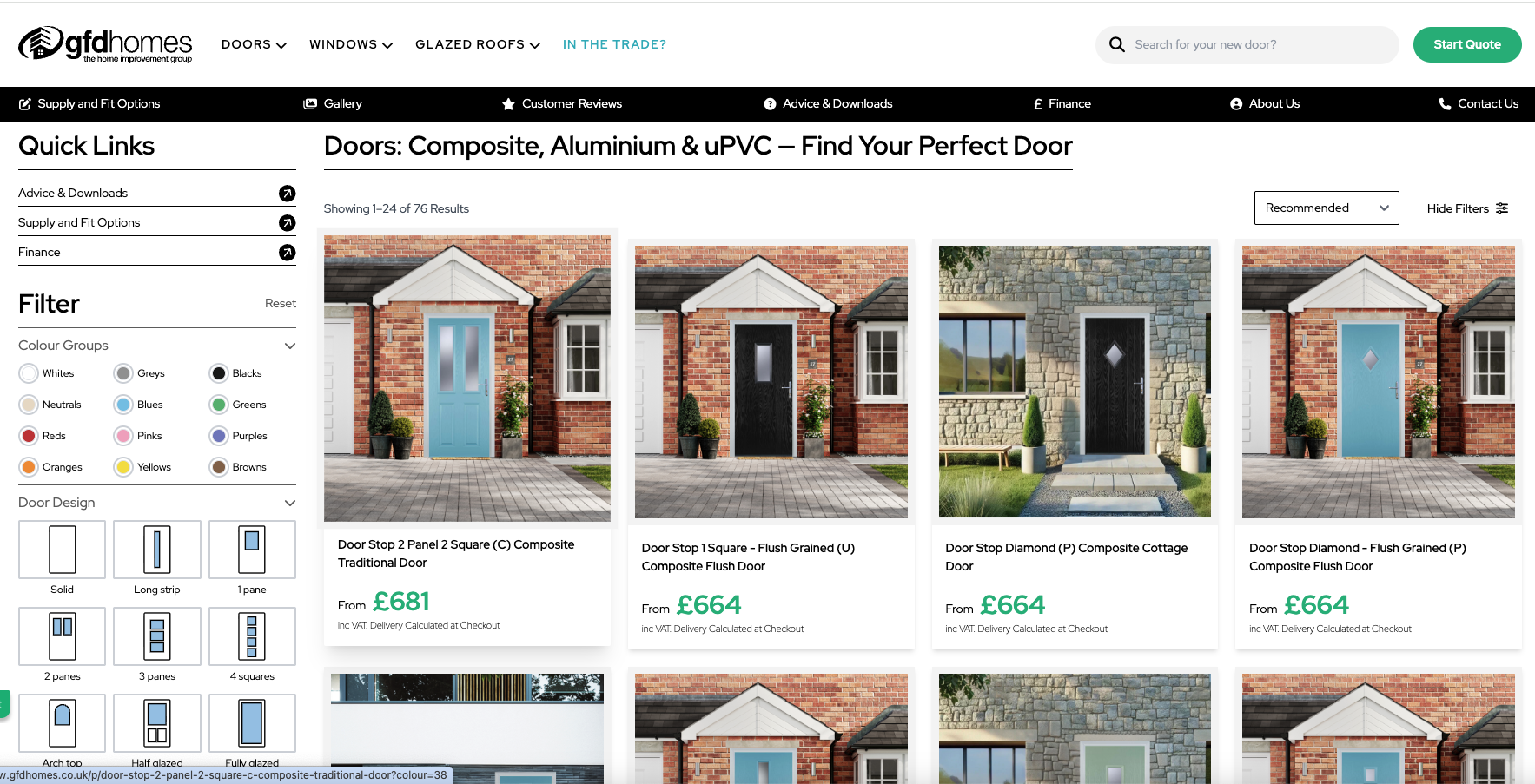 | 47% |
Solidor 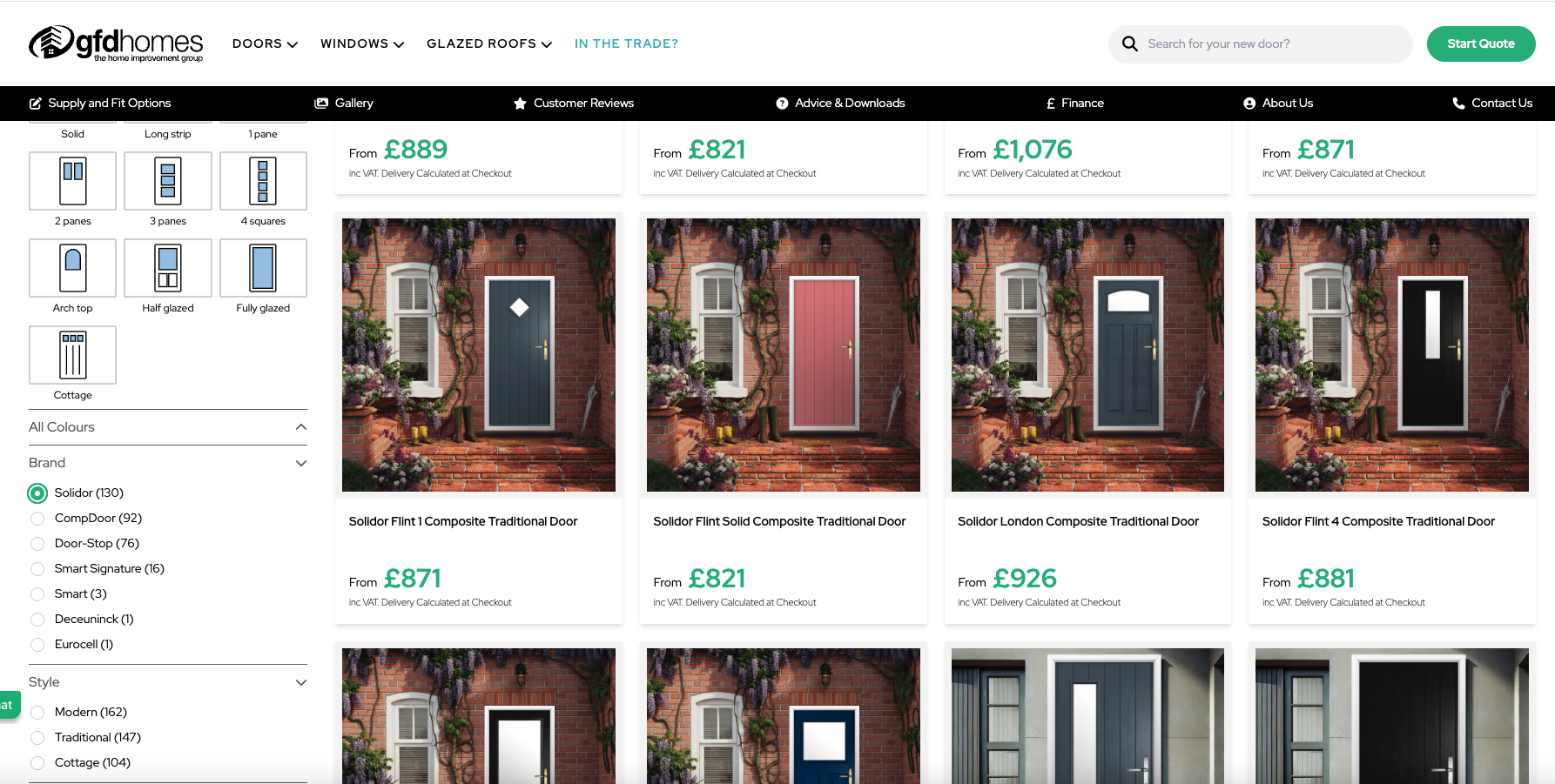 | 45% |
CompDoor 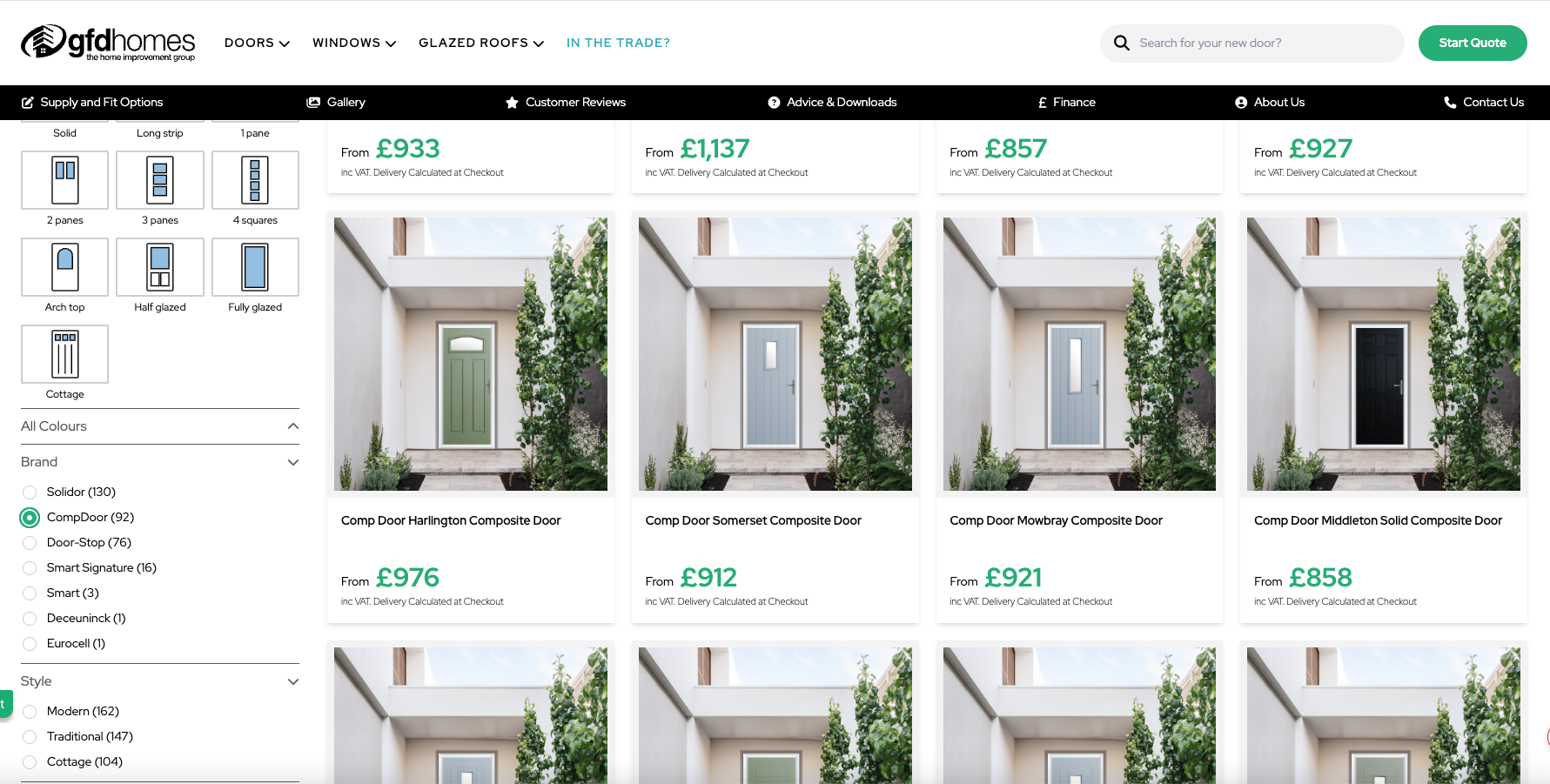 | 8% |
Door-Stop accounts for approximately 47% of the doors and sets reviewed, Solidor 45%, and CompDoor 8%. Door-Stop’s lead over Solidor is around two percentage points. The brands appear across different websites, ranges and price points, so these sales shares reflect that retail mix.
The regional results make the close overall finish easier to understand. Different areas contribute different mixes of brands, and no single result describes every part of the country.
The colour ballot: Chartwell Green takes 1st place
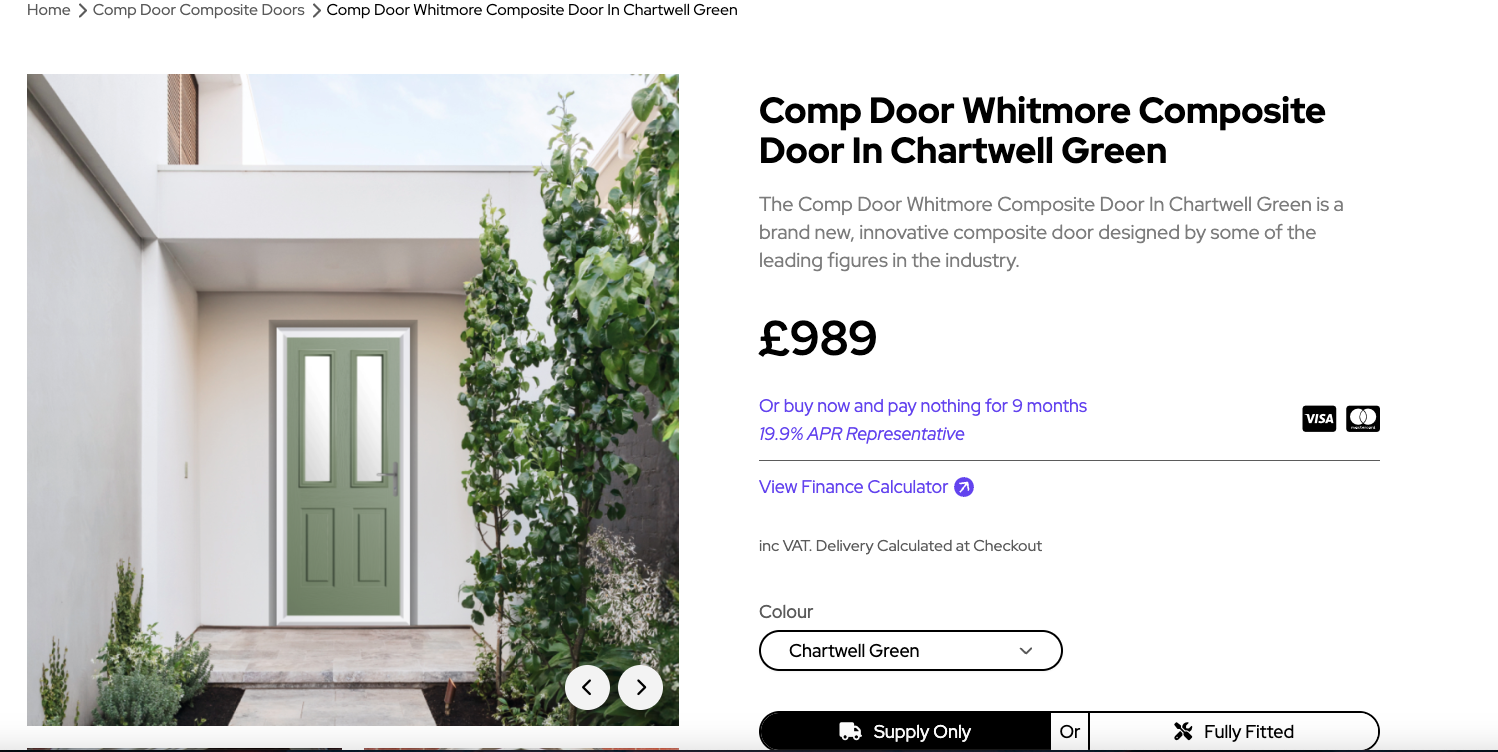
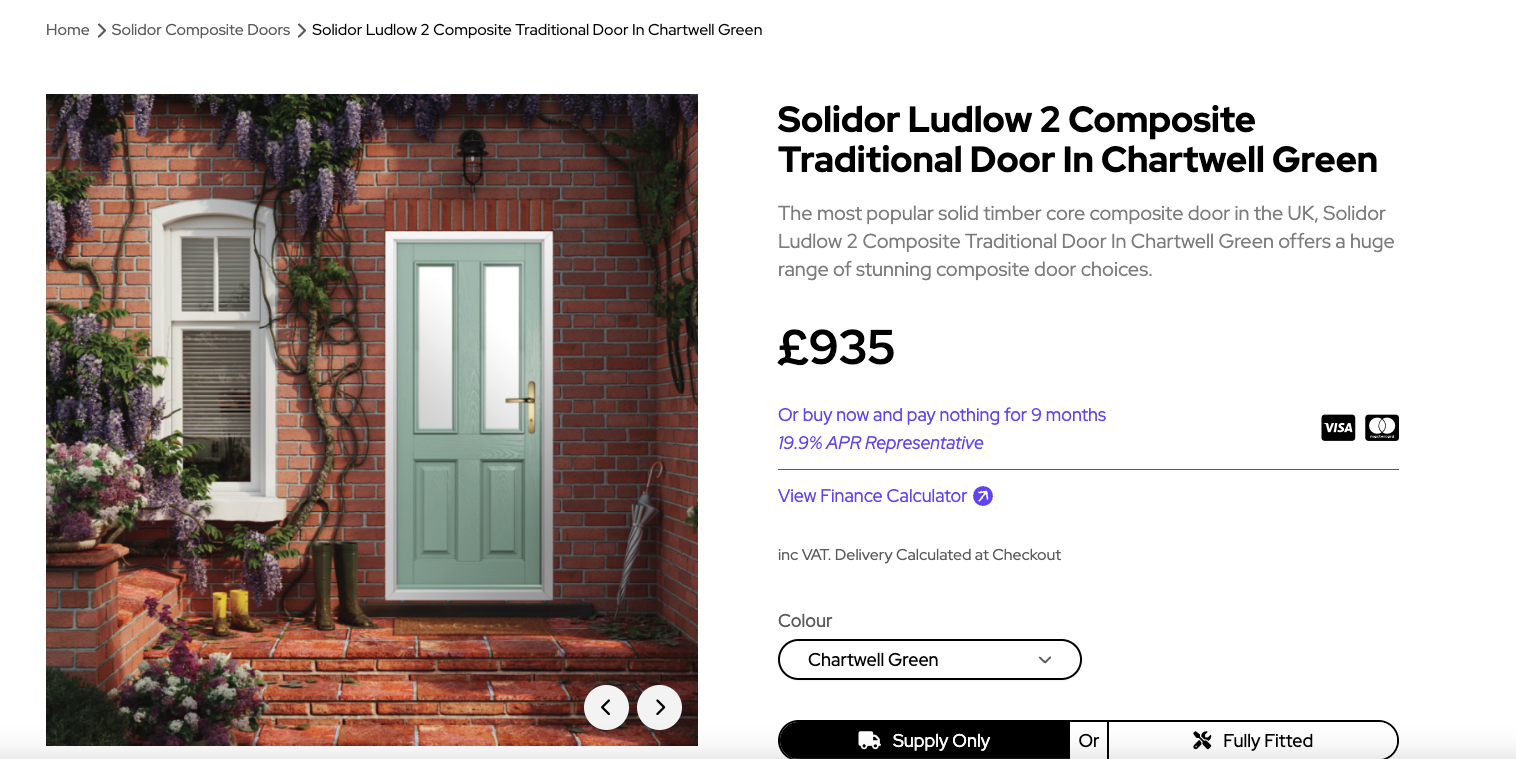
Recorded external colour | Share of known external colours |
13% | |
12% | |
11% | |
10% | |
7% | |
7% | |
5% | |
3% | |
3% | |
3% |
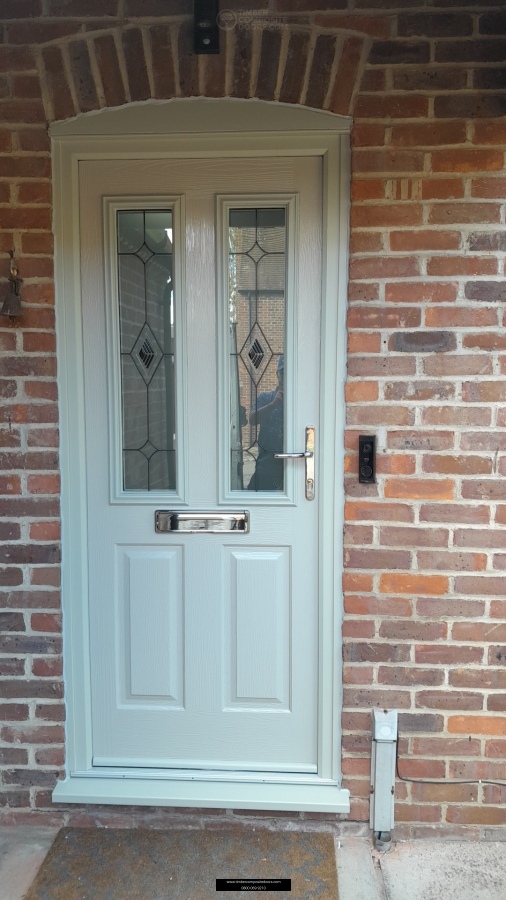
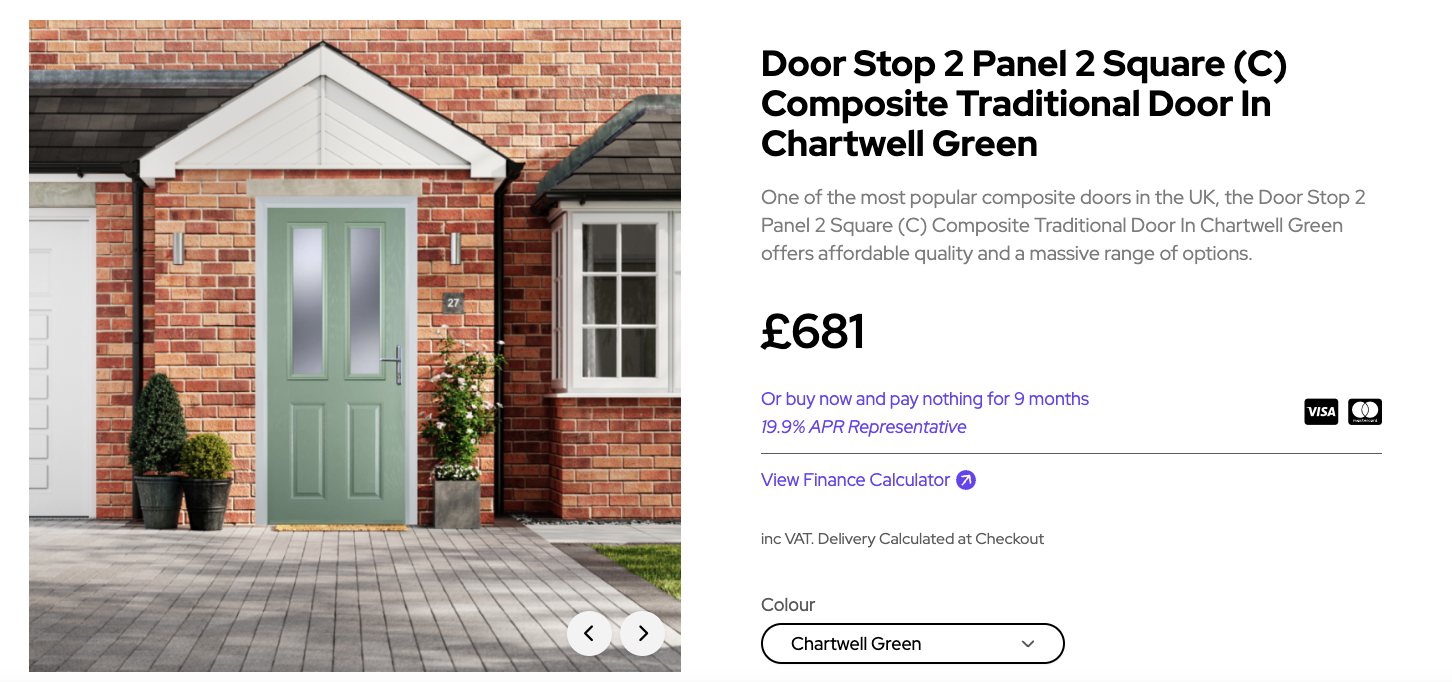
Chartwell Green accounts for approximately 13% of recorded external colours, ahead of Black at 12% and Anthracite Grey at 11%. Together, those three exact colour labels represent just over a third of known colours.
Colours with “Grey” in their recorded names account for approximately 35% of known external colours. That includes separate finishes such as Anthracite Grey, Pebble Grey and Agate Grey. We have kept those names separate, including Door-Stop’s plain “Grey”, rather than assuming differently named products are identical finishes.
Anthracite Grey leads within both Solidor and CompDoor, accounting for approximately 20% and 24% of their respective known colours. For Door-Stop, Grey leads on approximately 21%, followed by Chartwell Green on 19%. On GFD Homes alone, Chartwell Green is Door-Stop’s leading colour.
Brighter choices also appear in the orders. Solidor customers selected Buttercup Yellow, Peacock Blue and Champagne Blush alongside its leading neutrals. Door-Stop orders include Pastel Blue and Duck Egg Blue, while CompDoor’s palette includes Blue, Green and Red.
The styles behind the shades
A colour ranking only tells half the story. A shade can appear across many designs, while a popular style can be ordered in several finishes. These are the top three recorded styles within each brand.
Brand | Style | Share of known styles within brand |
Solidor | 13% | |
Solidor | 8% | |
Solidor | 5% | |
Door-Stop | 14% | |
Door-Stop | 7% | |
Door-Stop | 6% | |
CompDoor | 18% | |
CompDoor | 7% | |
CompDoor | 6% |
Solidor’s Ludlow 2 is its leading recorded style, followed by Flint 2 and Flint Beeston GB. Door-Stop’s leading trio is 2 Panel 2 Square (C), Diamond (P) and 1 Square (U). CompDoor’s Whitmore leads its recorded styles, ahead of Norfolk Solid and Aston Glazed 2.
The leading pairings make the choices more specific. Solidor’s strongest recorded style-and-colour combination is Ludlow 2 in Painswick. Door-Stop’s is 2 Panel 2 Square (C) in Chartwell Green. CompDoor’s Whitmore ties in Agate Grey and Anthracite Grey.
These pairings are more useful for showing real customer choices than assuming that the most popular colour and most popular style were always bought together. For example, Anthracite Grey leads Solidor colours overall, but Painswick leads the Ludlow 2 pairings.
The regional count: different places, different leaders
Delivery postcodes were matched to official ONS regions and UK nations where possible. The table reports local brand shares for areas with sufficient evidence. Very limited regional samples are not used to make preference claims.
Region / nation | Solidor | Door-Stop | CompDoor |
North East | 36% | 48% | 16% |
North West | 36% | 57% | 6% |
Yorkshire and The Humber | 44% | 50% | 6% |
East Midlands | 37% | 52% | 11% |
West Midlands | 44% | 47% | 9% |
East of England | 48% | 46% | 6% |
London | 55% | 35% | 10% |
South East | 50% | 43% | 7% |
South West | 46% | 45% | 9% |
Scotland | 47% | 49% | 4% |
Wales | 24% | 69% | 7% |
Solidor accounts for approximately 55% of the doors and sets reviewed in London and 50% in the South East. Door-Stop leads the North West on approximately 57% and Wales on 69%.
Some areas are closely contested. In the South West, Solidor accounts for approximately 46% of reviewed sets and Door-Stop 45%. In Scotland, Door-Stop accounts for approximately 49% and Solidor 47%. The remaining shares belong to CompDoor.
The Northern Ireland evidence is too limited to support a broad claim about local preferences, so a regional percentage breakdown is not published.
Does the North favour Solidor? Not in this retail sample
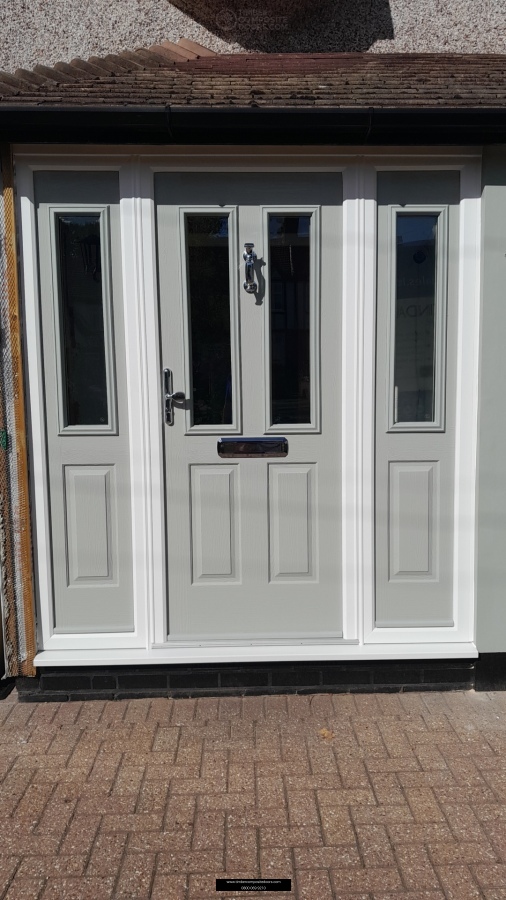
Here, the North means the North East, North West, and Yorkshire and The Humber. Door-Stop accounts for approximately 52% of reviewed sets across those regions, Solidor 39%, and CompDoor 9%.
The South is defined here as London, the South East and the South West. Solidor leads with approximately 50% of reviewed sets, followed by Door-Stop on 42% and CompDoor on 8%. The East of England and the Midlands are reported separately.
The direction remains the same on GFD Homes, where all three brands appear. Door-Stop accounts for approximately 44% of northern sets against Solidor’s 40%, while Solidor accounts for approximately 47% of southern sets against Door-Stop’s 36%. This checks that the result is not solely an effect of combining different retail websites, although customer and product mix still matter.
Does the South love a Cream door? The figures point elsewhere
Cream accounts for approximately 2.3% of known colours in the defined South and 3.7% in the defined North. It is more frequent proportionately in the North in these orders.
The highest regional Cream share is in the North East at approximately 5.6%, followed by the East of England at 4.9%. London records approximately 0.8% and the South West 1.1%. Cream remains a relatively uncommon choice, so these comparisons should not become sweeping regional stereotypes.
The same direction appears within each brand. Cream represents approximately 2.3% of known Solidor colours in the North versus 1.4% in the South, 4.7% versus 3.6% for Door-Stop, and 4.0% versus 1.3% for CompDoor. The CompDoor comparison is particularly limited and should be treated cautiously.
The regional colour leaders
Region / nation | Leading recorded external colour |
North East | |
North West | |
Yorkshire and The Humber | |
East Midlands | |
West Midlands | |
East of England | |
London | |
South East | |
South West | |
Scotland | |
Wales |
Anthracite Grey leads London with approximately 19% of known colours. Black leads both the North East and North West. Chartwell Green leads the East of England, West Midlands, Yorkshire and The Humber, and the South West.
Chartwell Green accounts for approximately 20% of known colours in the South West, compared with 13% across the full retail review. Its local share is around one and a half times the overall share. The mix of brands still matters when interpreting that difference.
Postcode battlegrounds and county checks
A region can hide much closer local results. In the NE postcode area, Solidor accounts for approximately 46% of reviewed sets and Door-Stop 42%. Across the wider North East region, Door-Stop leads on approximately 48% against Solidor’s 36%. The postcode area and official region cover different places.
Postcode area | |||
KT | 71% | 20% | 10% |
DL | 24% | 68% | 9% |
S | 30% | 57% | 13% |
GU | 46% | 50% | 4% |
NE | 46% | 42% | 12% |
PE | 46% | 48% | 6% |
TS | 39% | 37% | 24% |
TN | 48% | 48% | 4% |
KT gives Solidor approximately 71% of reviewed sets, while DL gives Door-Stop approximately 68%. PE and TS are close contests between those brands, and TN is tied. These are shares of the local three-brand total, not national market shares.
The limited Suffolk evidence leans towards Solidor, but is too small for a firm county preference claim. Northumberland’s retail results also favour Solidor, with approximately 56% of reviewed sets, against Door-Stop’s 28% and CompDoor’s 16%. Neither result should be presented as a county-wide mandate.
Traditional or contemporary: where the evidence is strongest
A complete East-versus-West style claim needs a common definition of traditional and contemporary across all three manufacturers. Exact styles are available, but the brands do not share one recorded classification. We have therefore not turned design names into an unsupported all-brand verdict.
Solidor’s recorded collections support a narrower style comparison. Approximately 80% of classified Solidor sets in the East of England are in the Traditional Collection, compared with 86% in the South West. Traditional is the majority in both, so the results do not support describing eastern Solidor customers as predominantly contemporary.
Italia-labelled collections account for approximately 38% of classified Solidor sets in Scotland, compared with 14% in the South West. This is a within-brand comparison, not a classification of every door sold in either area.
How we counted the results
The review covers Solidor, Door-Stop and CompDoor door line items for public customers on the three retail websites, placed from January to October 2026. Trade Village orders, cancellations, parts, accessories, windows and explicitly labelled remake lines are excluded. French-door sets follow their recorded order quantities. Unlabelled replacements cannot be identified reliably.
The main Hub extracts were taken on 3 November 2026, with a Global Door CompDoor supplement checked on 5 November. They include non-cancelled orders awaiting completion or full payment. This is an order analysis, not a count of completed installations, unique households or UK market share.
Missing styles and external colours are excluded from the relevant percentage calculations, but remain in brand totals. Exact manufacturer labels and design variants are retained. A common colour name across brands is a reporting label, not a guarantee of an identical finish. Percentages are rounded and may not add to exactly 100%. Absolute sales volumes, denominators and count-based winning margins are not published.
Official geography uses the ONS Postcode Directory for August 2026. Verified postcode-format corrections were applied using valid ONS postcodes and delivery-town information. Postcode areas are reported as postcode areas; county observations use the relevant ONS county or authority assignments. Very limited samples are qualified or suppressed. No year-on-year swing is claimed without a comparison period.
Geography source: ONS Postcode Directory, August 2026 (hosted table)
ONS guidance: postal geographies and administrative boundaries
Check out the related blogs:
GFD Homes Reveals the Most Popular Solidor Composite Doors of 2026: What Our Customers Actually Bought
Solidor: Shades of 2026 – The 10 Most Popular Front Door Colours Our Customers Actually Chose