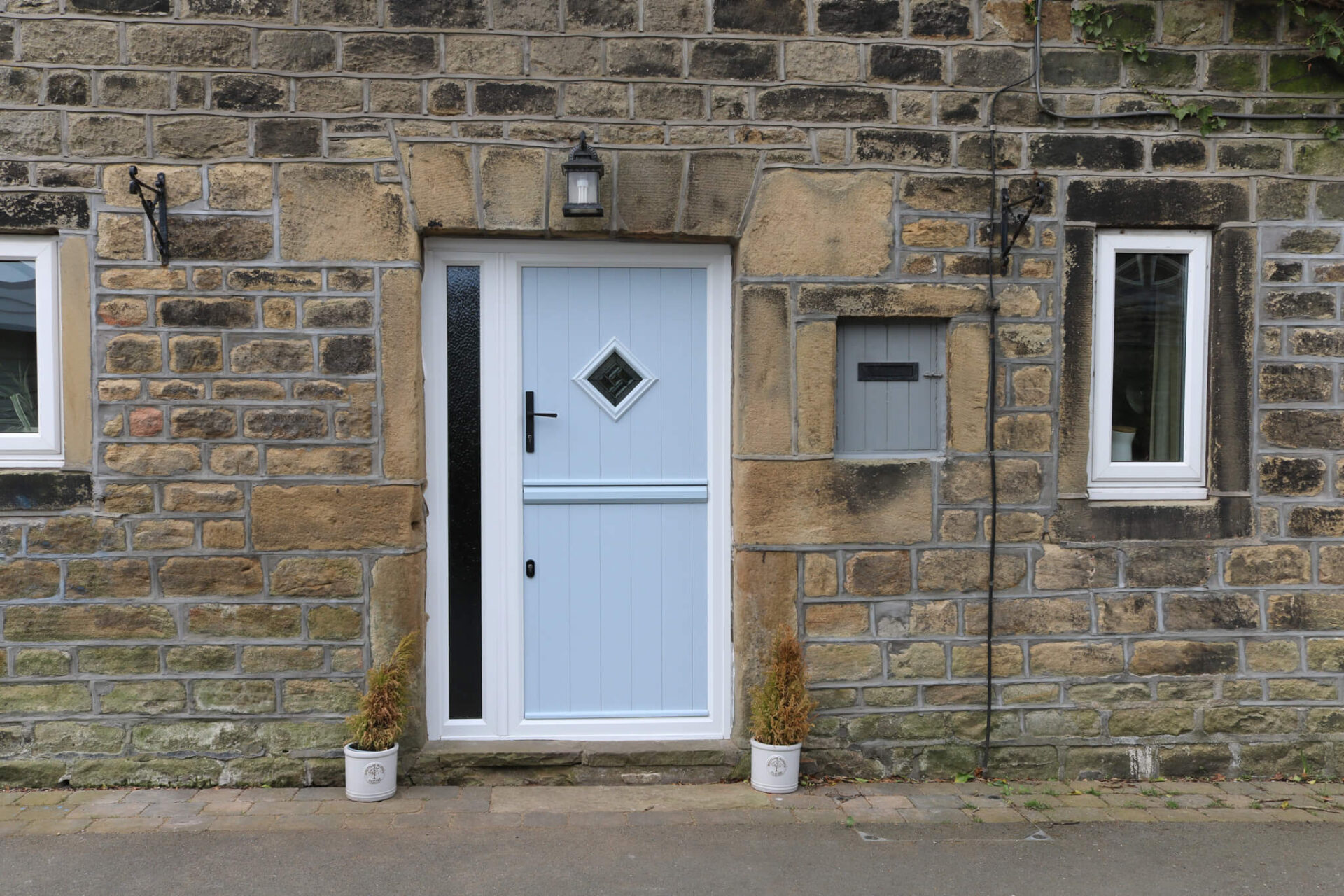
Last Updated on 20 July 2026 by Team GFD
Are composite stable doors right for your home? Explore the security, weatherproofing, and family practicality of split exterior doors with GFD Homes.
What You’ll Learn:
- The Split Blueprint: Understanding the Mechanics of Independent Door Halves
- Everyday Practicality: How Stable Doors Benefit Homes with Pets and Children
- Weather and Security Ratings: Verifying Performance Across a Dual-Slab System
- The GFD Homes Collection: Finding the Ideal Heritage or Modern Color Balance
(Estimated Reading Time: 8-10 Minutes)
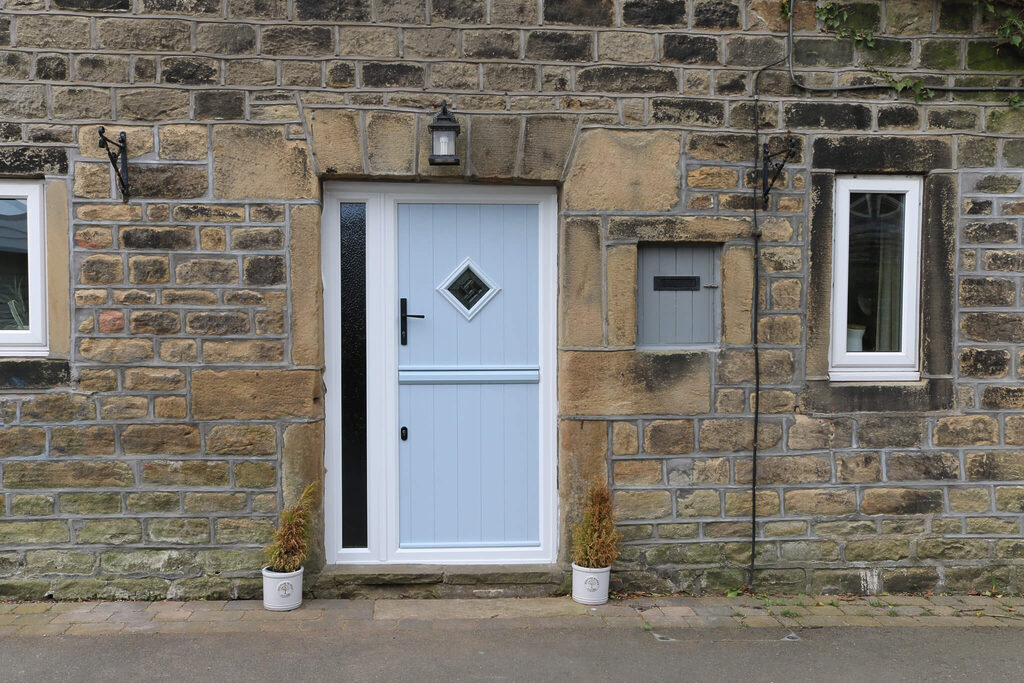
Introduction
Composite stable doors have a very particular architectural appeal. They feel instantly practical, highly characterful, and a little different from the standard front or back door. For some homeowners, they immediately suggest country charm and layout flexibility; for others, they raise a more cautious question: are composite stable doors actually a good idea in the real world, or are they just a nice-looking, niche novelty?
It is exactly the right question to ask. A stable door isn’t just a basic aesthetic choice—it fundamentally changes how your entryway operates, how your living space feels, and how your household manages daily routines. Before browsing styles, designing your layout through GFD Homes helps you evaluate whether a split-slab configuration aligns with your property and your lifestyle.
What is a composite stable door?
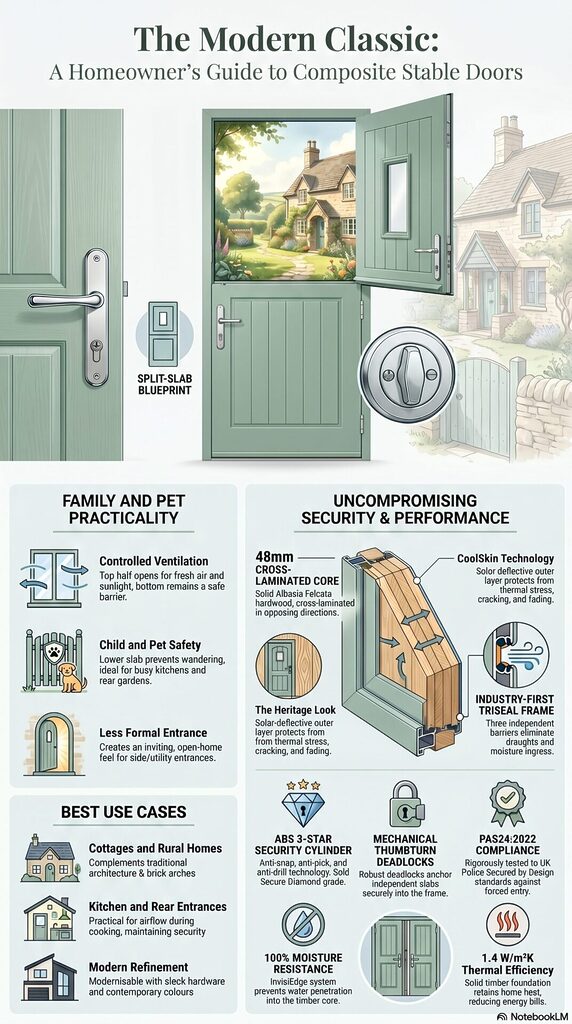
A stable door is a split design where the top and bottom halves operate independently. You can open the top while the bottom stays shut, or open the whole door like a normal one. Traditionally associated with cottages and utility entrances, the format has gone mainstream because it combines charm with practicality. A composite stable door applies that familiar concept to a modern composite build — giving you the character of a stable door with the security, weather resistance and performance of a premium entrance. People aren’t just buying a country door; they’re buying a different way of using an entrance.
Why do homeowners like stable doors?
- Character. A stable door has built-in charm. It feels warmer and more inviting than a standard full-height slab, and looks right at home on cottages, farmhouse-style houses and traditional renovations.
- Flexibility. The real practical advantage — open the top section for light or ventilation while keeping the lower half closed.
- Family practicality. For homes with pets or young children, keeping the lower half shut while the top is open creates a more controlled entrance without losing airflow.
- Versatility. Used well, stable doors suit a broad range of homes and locations, especially rear, kitchen and lifestyle-led side entrances.
Where do composite stable doors work best?
They’re at their best where the door isn’t just a formal entrance but part of how the household lives:
- Cottage and period-style homes, where the format feels naturally at home.
- Farmhouse-inspired and semi-rural homes, where it adds rustic character without sacrificing performance.
- Kitchen and rear entrances, one of the strongest use cases — open the top while keeping the lower section shut.
- Family homes with pets or young children, where the split design is genuinely useful.
- Anywhere the entrance should feel less formal, such as a side or rear door.
Stable doors are at their best when the way they work supports the way the home is used. If the only reason to choose one is “they look nice”, that may not be enough — but if the split functionality fits daily life, they can be a very smart choice.
Do stable doors only suit traditional homes?
No, though they need choosing carefully. They have a stronger association with traditional, cottage and country styling, and that’s part of the appeal — but they aren’t limited to old stone cottages. A cleaner composite stable door in a strong modern colour can feel more refined and contemporary than people expect. The most natural fit is still a home where a little extra warmth or softness in the entrance is a positive rather than a mismatch, so style choice matters: the right stable door looks intentional, the wrong one can feel slightly forced.
What’s the advantage over a traditional stable door?
The composite part is the point. A composite stable door takes the charm and practicality of the traditional format and combines it with the premium construction, security and thermal performance homeowners now expect — so you don’t have to choose between character and modern performance. Comp Door’s platform is built around a 48mm solid timber core, a 1.4 W/m²K U-value, PAS-24:2022, an ABS security cylinder as standard, advanced locking and Kubu smart technology on most standard door types. The brochure includes a stable door range within the wider offering, while noting that stable doors aren’t available with the Autofire multi-point lock — useful detail, because it shows the format is part of the serious composite offer rather than a novelty add-on.
Are composite stable doors secure?
Yes — provided you look at the platform behind the door, not just the format. Any split design needs to feel secure as well as attractive, so the strength of construction, the locking and the build quality all matter. A premium composite stable door should be part of a broader security-conscious system. Comp Door’s wider range is clearly built around security, solid-core construction and advanced locking, which supports the credibility of the stable door offer even with the noted lock-format difference. So yes, they can absolutely be secure — just compare properly and understand the exact locking setup being offered.
Are they warm and weather-resistant?
A good composite stable door should still perform strongly on warmth, weather protection and everyday comfort — it shouldn’t just look attractive. This comes back to product quality: solid-core construction, weather-focused framing, stronger skins and better sealing all help. Comp Door’s wider construction story around CoolSkin, TriSeal and InvisiEdge supports that premium-performance angle, which matters because you shouldn’t have to trade practical performance for character.
What styles and colours work best?
Stable doors carry a strong visual personality, so they’re sensitive to colour and hardware. Soft heritage shades — Chartwell Green, Duck Egg Blue, Cream and softer greys — reinforce the classic warmth of the format. Black and darker greys work too, for a stronger, more refined entrance with more contrast. Natural timber-effect tones suit a softer, farmhouse feel. Broad colour choice is valuable here, and Comp Door’s range gives you the freedom to choose a stable door that suits the house rather than defaulting to one narrow country palette. Glazing and hardware matter just as much: too modern a treatment can look confused, too rustic can feel themed, and the best results come when the door supports the architecture and the way the entrance is used.
Are they right for every home?
No — and it’s worth saying clearly. A stable door is a strong choice for the right home, but not automatically the best everywhere. If the property is very formal or modern, or the entrance needs to feel sleek and architectural, a standard composite door may be the better fit. Stable doors work best where their character and functionality both make sense: if you genuinely want the practical benefits and the softer style, they can be brilliant; if you only like the image of them, a standard door may be the wiser choice. They should be chosen as part of a whole-home decision, not just because they look appealing in isolation.
The bottom line
A composite stable door can be an excellent choice if you want a front or rear entrance that combines character, practicality and premium composite construction — especially on cottages, traditional homes, kitchen and rear entrances and family homes. They’re less about a dramatic modern statement and more about an entrance that feels charming, useful and very liveable. For the right home, that can be exactly the right answer.
🛒 Browse the full collection at www.gfdhomes.co.uk
📞 Or call 01642 309576 for expert guidance and a no-pressure quote.
In a rush? Why not contact us via Whatsapp
Browse Our Article
- Blue Composite Door: Transform Your Home & fall in love from Just £568
- Best Composite Doors in the UK: Top Picks for Style, Security & Value
- Composite Door Prices Made Simple
- Looking for Trade Products? Explore The Trade Village
FAQ’s
1. What exactly is a composite stable door and how does it operate? A composite stable door features a horizontally split design where the top and bottom halves can operate completely independently of one another. An internal central interlocking strip allows you to open the top section on its own for ventilation while keeping the bottom section securely locked, or lock the two halves together to use it like a standard single door.
2. Why are these split doors highly recommended for families and pet owners? They offer a perfect combination of safety and airflow. In kitchens, utility rooms, or rear garden entries, you can leave the top half wide open to let in fresh air and natural sunlight during warmer months, while the closed bottom half acts as a secure barrier to keep toddlers and family pets from wandering outside.
3. Are composite stable doors just as secure and draft-proof as standard doors? Yes, provided you choose a premium platform. While traditional wooden stable doors are infamous for leaking, dropping on their hinges, and being easy to force open, modern composite alternatives utilize heavy-duty perimeter weather seals and dense 48mm solid timber cores. They are fully certified to PAS-24:2022 security standards and feature high-security ABS anti-snap cylinder deadlocks on both sections.
4. What unique hardware or locking differences apply to a stable door? Because of the horizontal split layout, stable doors cannot accommodate automatic slam-shut multi-point locks like the Avantis Autofire system found on standard front doors. Instead, they utilize a robust mechanical key-operated thumbturn deadlock system to anchor the two independent slabs safely together into the frame.