Discover roof lantern light terminology with GFD Homes. Simple explanations, glazing tips, and what to know before you buy.
What You’ll Learn:
- How GFD Homes explains the essential structure of a roof lantern
- How glazing choices affect light and comfort with GFD Homes
- How design angles influence style and light with GFD Homes
- What to consider before choosing your roof lantern with GFD Homes
(Estimated Reading Time: 5-6 Minutes)
Introduction: “I Just Wanted More Light — Why Am I Suddenly Learning Architecture?”
At GFD Homes, we know the moment you start researching a roof lantern you’re suddenly hit with a world of glazing jargon — even when all you wanted was more light in your home. Ridge caps, thermally broken rafters, U-values, kerbs… it can feel like you’ve wandered into an architecture lesson you never asked for.
Don’t worry. Whether you’re brightening a kitchen, transforming an extension, or adding a dramatic architectural feature, this guide breaks down every confusing term into clear, practical language. By the end, you’ll know exactly what each detail means, why it matters, and how to choose the perfect roof lantern for maximum light and comfort — all with support from GFD Homes.
1. What Is a Roof Lantern, Really?
A roof lantern is a raised, glazed structure installed on a flat roof.
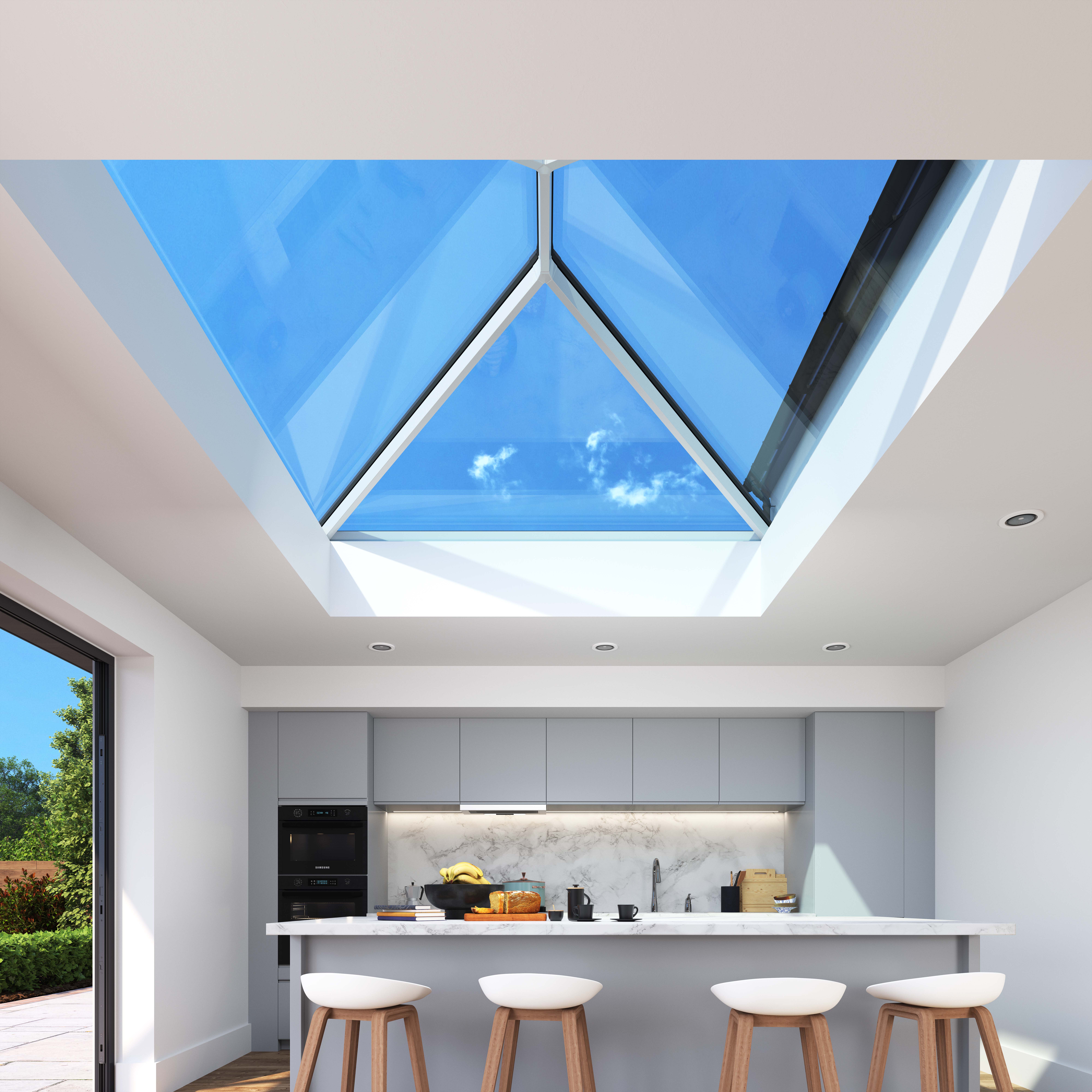
Think of it as a skylight with a sense of drama — it allows daylight to flood into your space from above, while adding architectural depth.
They’re typically made from aluminium frames holding double or triple-glazed panels, available in different shapes and pitches (angles).
2. Roof Lantern Key Terms Explained
a. Ridge
The ridge is the central beam that runs along the top of the lantern — where the two sloping sides meet.
Why it matters:
A slimmer ridge means less visible frame and more natural light. Premium systems like Atlas boast some of the narrowest ridges on the market, giving that modern, minimal look.
b. Rafter
Rafters are the sloping supports that hold the glass panes in place.
Why it matters:
Strong rafters mean your lantern can span larger openings without extra tie bars (which interrupt the view).
Aluminium rafters are lighter yet stronger than timber — ideal for wide, open-plan spaces.
c. Pitch
The pitch is the angle of the roof panels — usually between 20° and 35°.
Why it matters:
- Higher pitch = more height and drama.
- Lower pitch = a sleeker, contemporary look.
Tip: For most homes, 25° gives the best balance of looks and light.
d. Thermal Break
A thermal break is a layer of insulating material within the aluminium frame that stops heat escaping.
Why it matters:
It’s what makes modern aluminium roof lanterns energy-efficient.
Without it, your lovely new kitchen could lose heat like an open window.
Systems like Atlas and Korniche use multi-chamber thermal breaks for maximum insulation.
e. U-Value
The U-value measures how well the lantern retains heat.
Lower is better.
Typical range: 1.2–1.5 W/m²K
Why it matters:
It tells you how energy-efficient the product really is — and affects your building control compliance too.
f. Glazing Types
This is one of the biggest sources of confusion, so let’s break it down:
| Type | What It Does | Why You’d Choose It |
|---|---|---|
| Toughened Double Glazing | Standard, safe, strong | Great all-rounder |
| Triple Glazing | Adds insulation, reduces noise | For cold climates or bedrooms |
| Self-Cleaning Glass | Uses UV light and rain to remove dirt | Ideal for hard-to-reach roofs |
| Solar-Control Glass | Reflects solar energy | Prevents overheating on sunny days |
| Tinted Glass (Blue/Bronze/Neutral) | Aesthetic choice, reduces glare | Helps match decor or reduce brightness |
Tip: Self-cleaning solar glass is worth it — it keeps the lantern clear with minimal maintenance.
g. Warm Roof vs Cold Roof
These refer to how your flat roof is insulated.
- Warm Roof: Insulation is above the roof deck — keeps the entire structure warm.
- Cold Roof: Insulation sits below the roof deck — cheaper but less efficient.
Why it matters:
Roof lantern performance depends on the roof it’s sitting on. Warm roofs are recommended for new builds and extensions.
h. Kerb
A kerb is the raised upstand the lantern sits on. It ensures water drains away properly and provides a fixing point.
Why it matters:
- Without a proper kerb, your roof may leak.
- Most suppliers (including GFD Homes) provide optional kerbs to make fitting easier.
i. Sightlines
This refers to the visible width of the frame between glass panes.
Why it matters:
Slim sightlines mean more glass, less frame, and cleaner views.
Atlas and Korniche both lead here — often under 50 mm.
j. Capping System
The capping is the external finishing strip that protects fixings and gives the lantern its final look.
Options:
- Contemporary flat caps (minimalist look).
- Traditional ornate caps (more classic).
Why it matters:
It’s the difference between a modern architectural look and a heritage one — pick the style that fits your home.
3. The Major Players
- From £793 inc VAT (1000 × 1000 mm)
- Ultra-slim rafters and ridges.
- No tie bars required up to 3m × 2m.
- U-values down to 1.2 W/m²K.
- Optional self-cleaning solar glass.
Ideal for homeowners wanting the thinnest frames and sharp architectural detail.
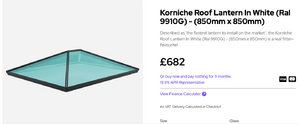
- From £682 inc VAT (850 × 850 mm)
- Clip-fit design for easy installation.
- U-values as low as 1.2 W/m²K.
- Wide colour range (17 colours + dual colour).
Perfect for both contemporary and traditional homes, with installer-friendly design and stunning finish.
4. Common Confusions Cleared Up
| Term | Common Misunderstanding | The Real Meaning |
|---|---|---|
| Ridge | “Just decorative” | It’s the structural spine of the lantern |
| Thermal Break | “Marketing term” | Stops heat loss through aluminium |
| Kerb | “Not important” | Prevents leaks, ensures drainage |
| Pitch | “Doesn’t matter” | Affects both looks and light |
| Self-Cleaning Glass | “Gimmick” | Proven UV-activated coating that works |
| U-Value | “Complicated math” | Lower = better insulation |
5. Things to Think About Before Buying a Roof Lantern
- Size & Shape:
- Square looks modern; rectangular fits traditional layouts.
- Orientation:
- South-facing? Choose solar-control glass.
- Roof Type:
- Warm roof preferred for performance.
- Colour:
- Match windows/doors — Anthracite Grey (RAL 7016) and Jet Black (RAL 9005) are timeless.
- Maintenance:
- Self-cleaning coatings save time and effort.
6. Roof Lantern Installation & Aftercare
At GFD Homes, each lantern is made to measure and supplied with full fitting instructions.
You can choose supply-only or installation through our approved partners.
Every order includes:
- 10-year manufacturer warranty.
- UK-wide delivery.
- Aftercare team ready to assist.
7. Why Buy Direct
If you place the order, your warranty sits in your name.
If your builder orders it, the warranty belongs to them — meaning you’ll have to go through them for any aftercare or service.
Buying direct ensures:
- Full warranty protection.
- Direct contact with our support team.
- Peace of mind for years to come.
8. Instant Online Pricing
You can price and order your roof lantern online instantly — down to the millimetre — with no guesswork or sales visits.
Try it now:
Every configuration, colour, and glass option updates live — giving you transparent pricing before you buy.
9. In Summary
You now know:
- What ridges, rafters, kerbs, and pitches really mean.
- How thermal breaks and U-values impact comfort and efficiency.
- Why glazing choice matters more than you think.
- And how to buy with confidence — not confusion.
Roof lanterns aren’t complicated when you’ve got the right information — and the right team behind you.
At GFD Homes, we’re here to guide, not push — and to help you bring light, warmth, and architectural beauty into your home.
🛒 Browse the full collection at www.gfdhomes.co.uk
📞 Or call 01642 309576 for expert guidance and a no-pressure quote.
In a rush? Why not contact us via Whatsapp
Browse Our Articles
- Roof Lanterns or Roof Lights? What’s Best for Your Flat Roof Extension?
- Roof Lantern Showdown: Atlas vs Korniche 2025
- Korniche Roof Lantern 2.0: Next-Gen Roof Lanterns
- Looking for Trade Roof Lanterns? Explore The Trade Village
FAQ’s
1. What does a roof lantern actually do?
A roof lantern from GFD Homes brings natural light into your space from above, improving brightness, atmosphere, and architectural impact.
2. Are aluminium roof lanterns better than timber?
Yes. GFD Homes supplies aluminium systems because they’re stronger, lighter, and offer slimmer sightlines for more light.
3. Do I need a kerb for installation?
In most cases yes. GFD Homes provides optional kerbs to ensure proper drainage and a secure fit for your roof lantern.
4. What glass is best for sunny rooms?
GFD Homes recommends solar-control glazing to prevent overheating while retaining bright natural light.
5. How energy-efficient are modern roof lanterns?
Systems from GFD Homes offer low U-values and thermal breaks, helping your home stay warm while maximising light.